Gas yesterday, electricity today, thermal energy storage tomorrow—or perhaps hydrogen? This isn’t a vision of the future, but rather Dürr’s new concept for body drying, presented at the Open House. In a nutshell, there are now only two types of dryers that can flexibly utilize all types of energy thanks to the newly developed Qflex technology. One of the key innovators behind the strategy is Product Manager Dr. Heiko Dieter.
A conversation with Product Manager Dr. Heiko Dieter at the Dürr Campus.
Dr. Dieter, Dürr is fundamentally reorienting its drying technology. Why now?
Because energy is no longer a secondary concern. In the past, we mainly talked about quality, productivity, and investment. Today, energy availability, cost, and the origin are equally important. The energy crisis has made it clear how dependent industrial plants can be on specific energy sources. Security of supply has become a critical production factor and we have responded accordingly.
What is your personal perspective on the topic?
I am a process engineer and earned a doctorate in energy technology, with a strong focus on process and systems development. As a result, I always think of systems from a holistic perspective. At the same time, I closely monitor geopolitical developments and the impact they have on our customers. For me, it is therefore clear: In the future, dryers must no longer be rigidly designed for a single energy source but must be capable of adapting to changing requirements. This is precisely how the concept of the Qflex technology - designed to provide complete energy flexibility – was developed.
What does energy flexibility mean in practicle terms?
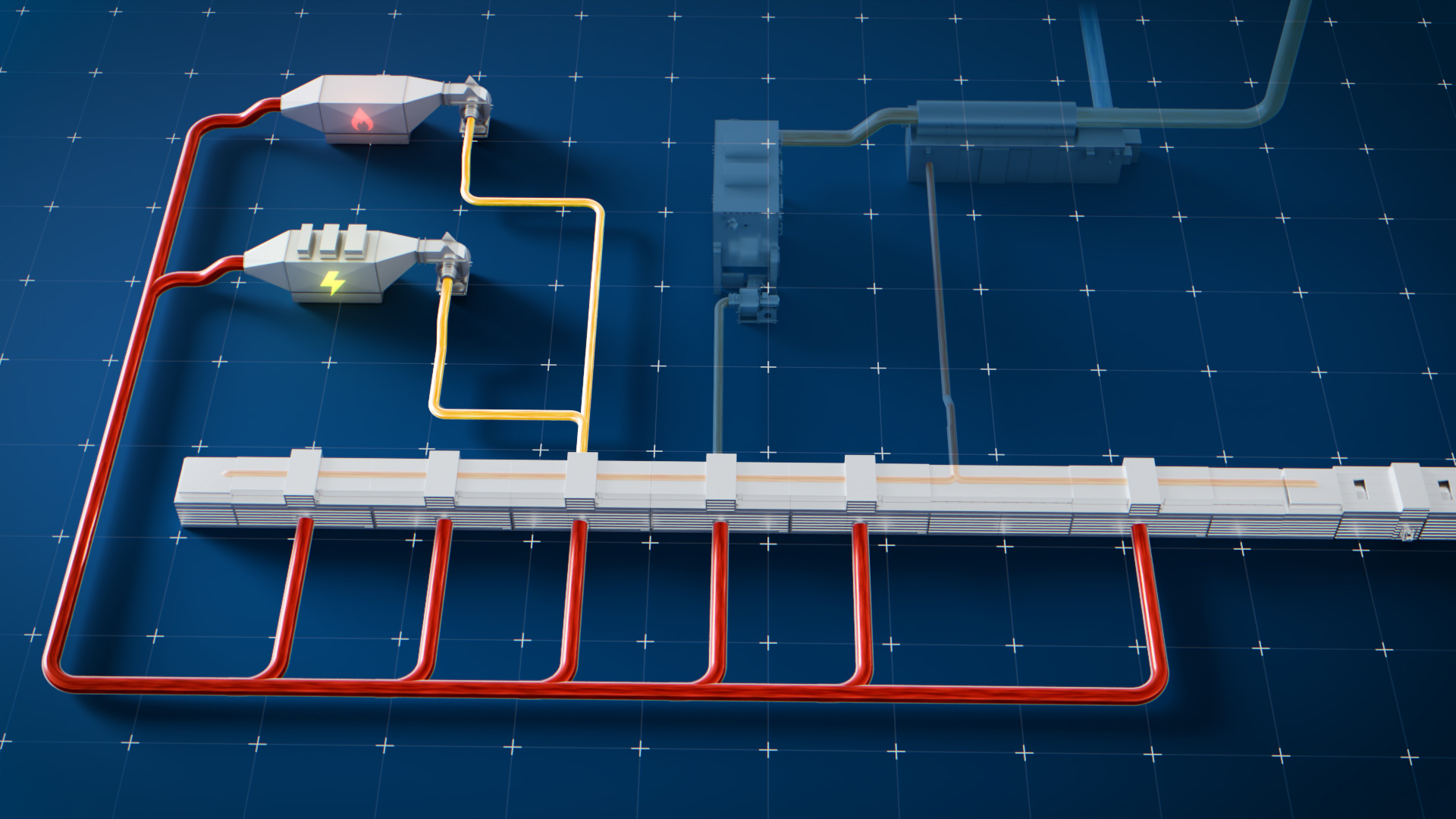
Until now, a dryer was typically tied to a single energy source — either gas or, more recently, electricity. Later changes usually required a major system overhaul. Now we consistently separate the dryer and the heat source — treating all components as module units that can be flexibly combined. This is made possible by Qflex technology, which uses a centralized heating system supplied by modular heating units. This approach allows heat to be generated independently of the drying system, whether from gas, electricity, or another source. If an operator wants to switch energy sources, the dryer remains untouched. Only the central heating module is modified or expanded - by adding additional modules - to create a hybrid system. This involves manageable costs and minimal downtime. Energy flexibility therefore, means that the system can adapt to changing energy policies and economic conditions without requiring a complete rebuild of the dryer each time.
The modern EcoSmartCure integrates the entire drying process into a single unit.
Is that why Dürr has radically streamlined its oven portfolio?
Yes. We are deliberately focusing on two core oven types. The EcoInCure remains our high-performance system, designed to effectively dry car bodies from the inside. At the same time, we developed the EcoSmartCure, an innovative long dryer concept that operates in stop-and-go mode.
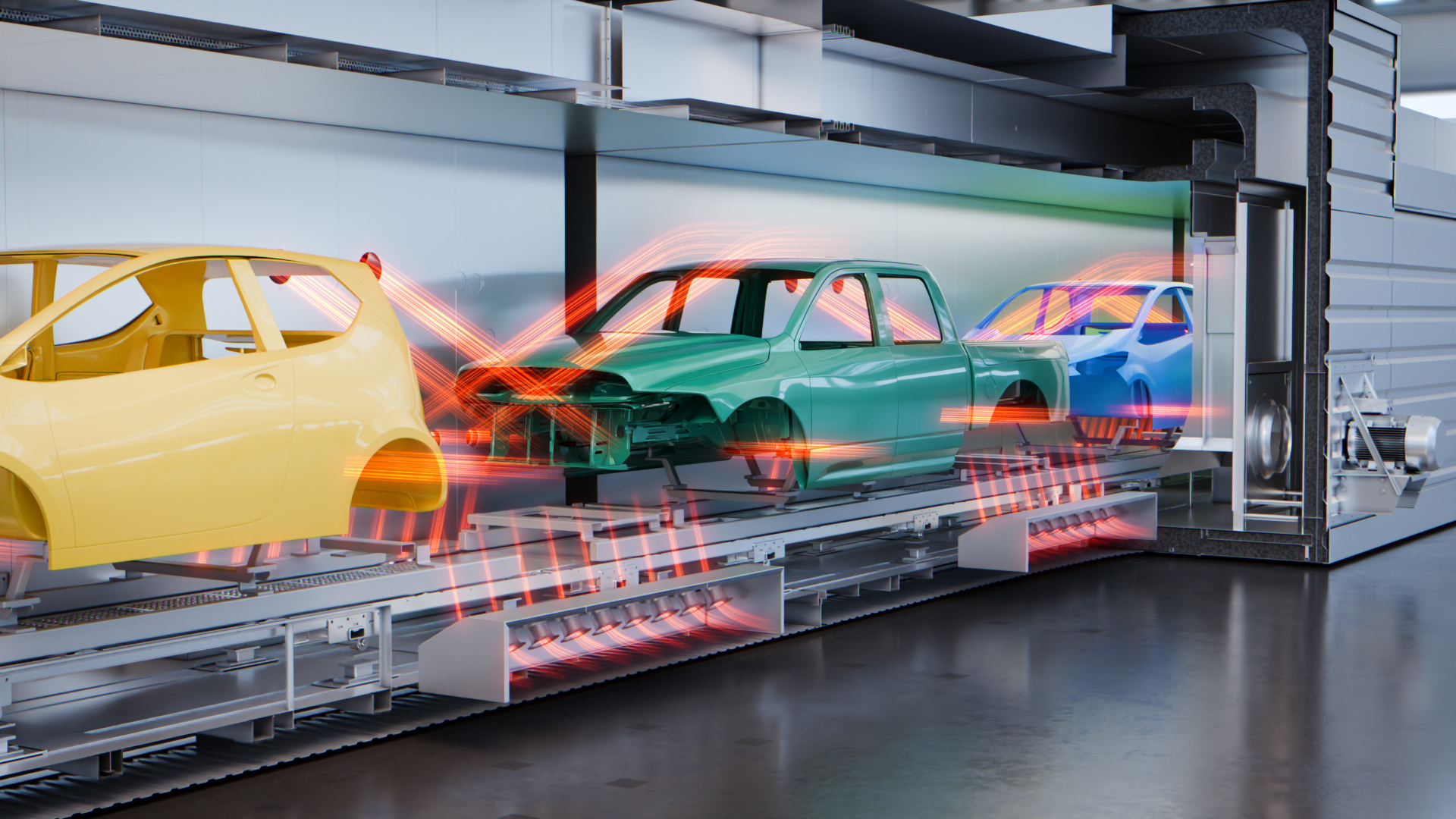
The central heating module makes it easy to switch between energy sources.
What advantages does the Qflex strategy offer your customers?
It ensures reliable energy supply and provides greater economic flexibility. With a hybrid system, our customers can actively manage operating costs. If solar power is cheap at midday, they use electric heating. If prices rise, they switch to gas. Another key benefit is long-term investment security. Many companies currently run their dryers on gas but plan to switch to electric heating in the medium term, for example when they build their own solar installations. When the time comes, the energy transition is easy thanks to Qflex.
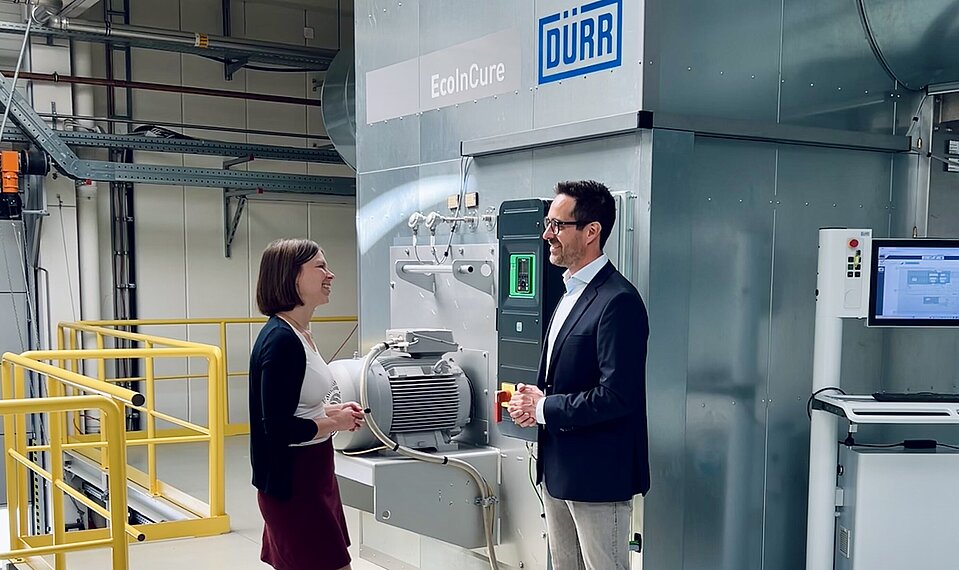
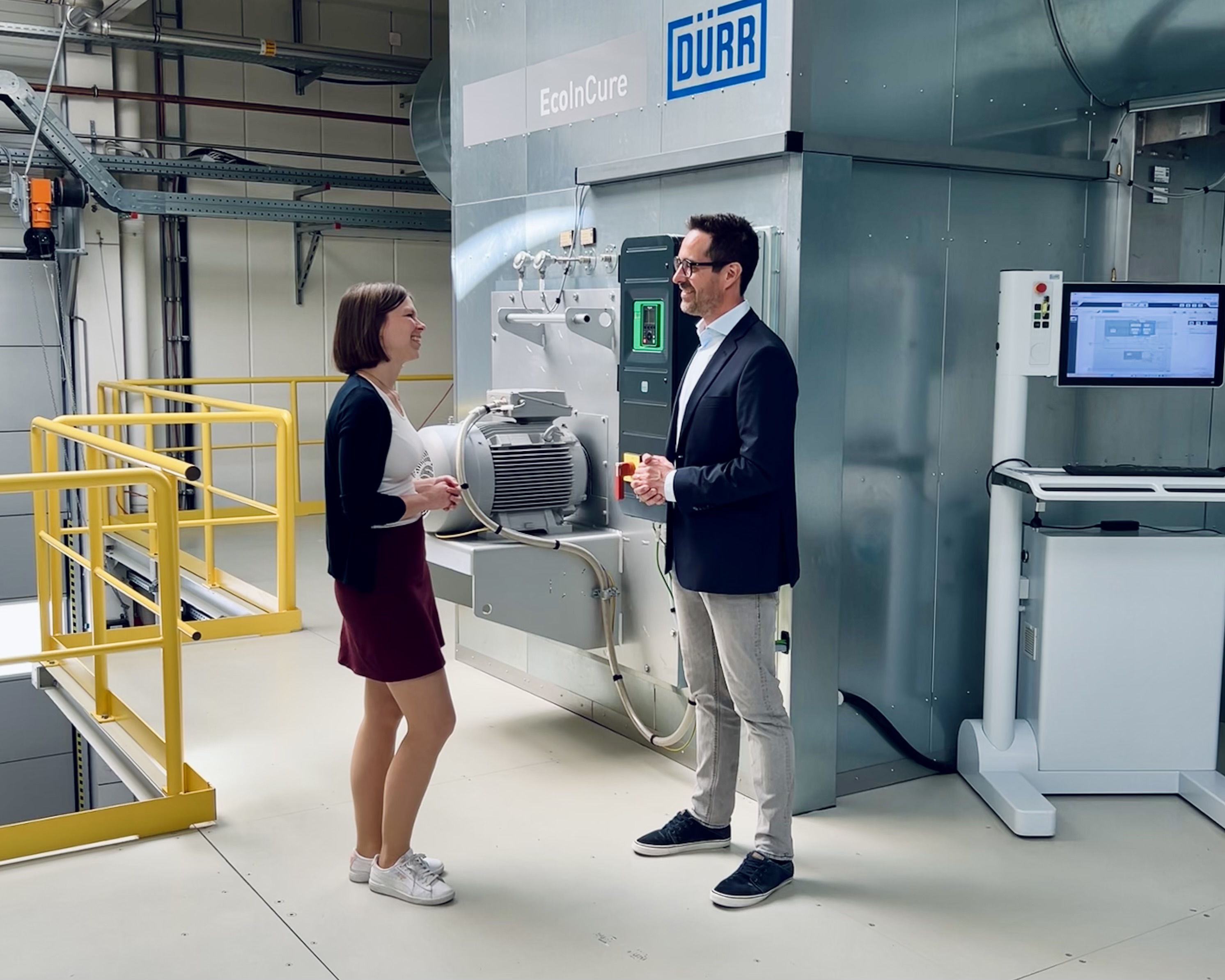
A conversation about the EcoInCure.
Many customers now rely on electric heating. However, electric systems are generally considered more expensive to operate. How does that fit with cost-effectiveness?
The key factor is keeping energy within the system. In other words, energy that isn’t lost doesn’t need to be generated in the first place. Our various energy-efficiency modules, which directly impact operating expenses (OPEX), are based on this principle. A key contribution to reducing losses is the highly efficient recovery of heat from exhaust air to preheat fresh air. Furthermore, significant benefits can be achieved by reducing the system’s surface area, improving insulation, and using smart software solutions—such as dynamically adjusting exhaust air flow rates based on system load during partial-load operation. Overall, this allows us to achieve savings of up to 50 percent in energy costs compared to a modern, gas-heated reference system. The principle is simple: You don’t have to pay for energy you don’t use.
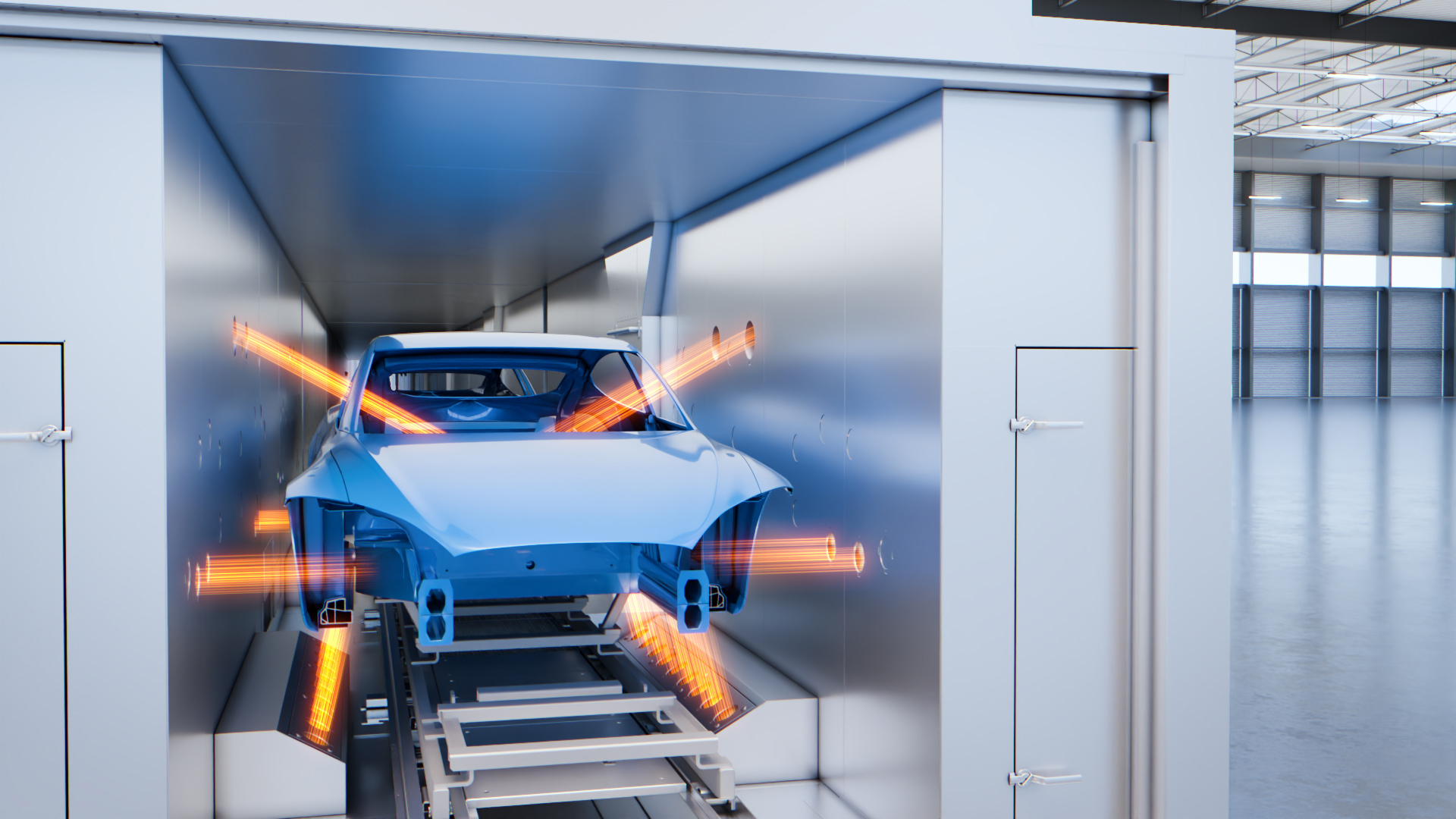
The EcoSmartCure combines the central heating concept with the stop-and-go principle.
Energy and product strategy is one thing. Where does it become technically tangible?
In the new EcoSmartCure, for example, through its stop-and-go operating concept. Instead of blowing large volumes of air onto the body in continuous operation, we now use targeted stationary phases with controlled airflow, directed to specific areas — such as the side sills or into the vehicle interior. As with the EcoInCure, heat is precisely directed to areas with large or heavy components. This accelerates heating, ensures more uniform temperature distribution, and reduces material stress, resulting in improved paint quality.
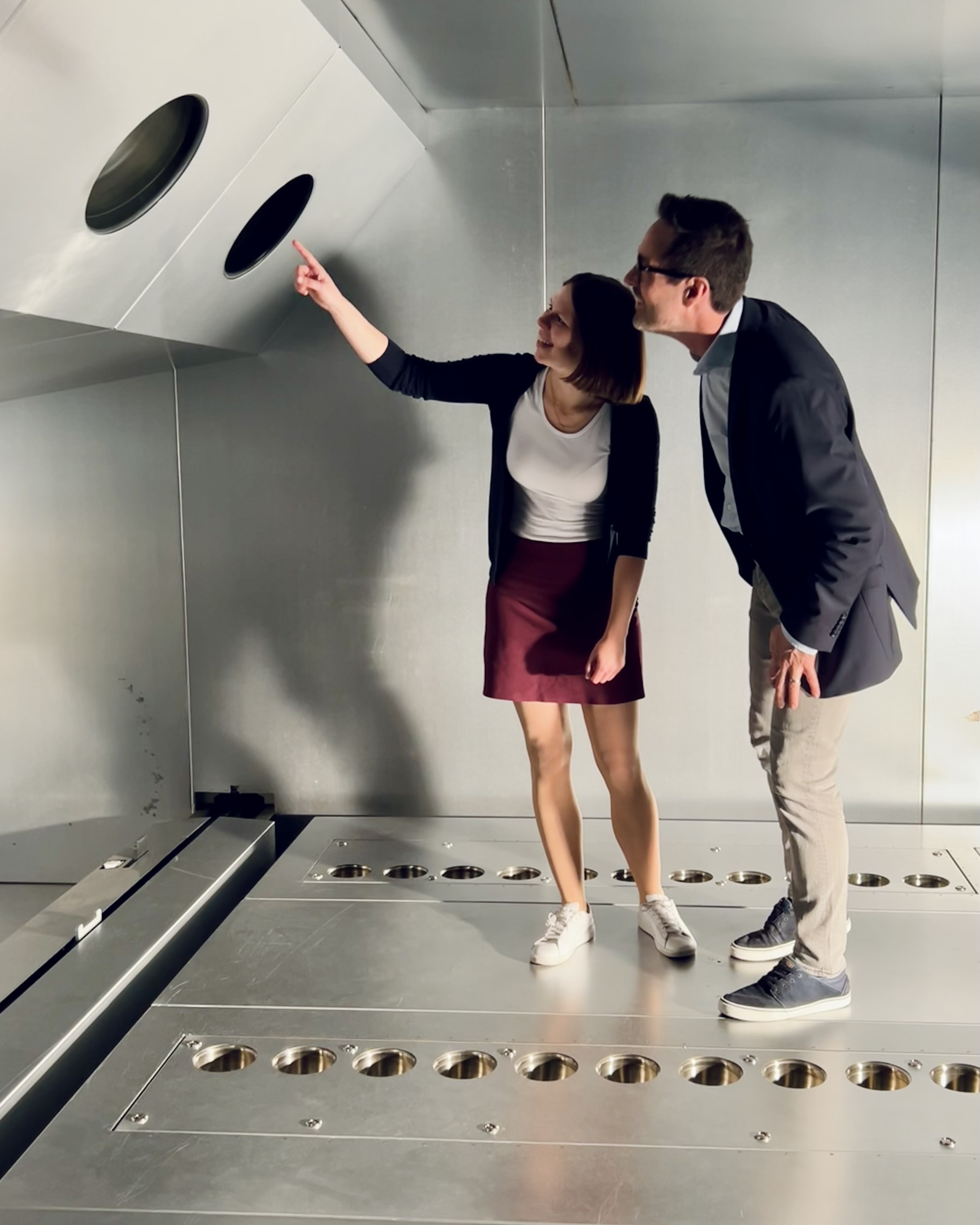
Inspecting the heating technology in the dryer.
Are there any other changes?
Yes. The EcoSmartCure is consistently designed with a compact footprint. Fans and ductwork are integrated into the dryer, eliminating the need for a second level. This reduces heat loss and also lowers investment costs.
We’ve talked a lot about technology, platforms, and efficiency. What actually needs to happen internally — behind the scenes — for these ideas to become a new strategy?
This requires a lot of dialogue, close coordination with colleagues in development, evaluation of existing solutions, and a shared view of the market. We engage in discussions, discard approaches that are less effective, and build on new ideas. In the end, strategy is not a single flash of inspiration, but the result of many conversations and integration of different perspectives.
Finally, on a personal note: What drives you on this topic?
For me, the energy transition is much more than just a technical challenge. It offers an opportunity to improve energy consumption, CO₂ emissions, and operating costs alike. If we succeed in reducing energy policy dependencies through sustainable, local energy generation and flexible energy use, that would be a significant step forward—both ecologically and socially. The fact that I can work on solutions at Dürr that make a concrete contribution to this is a strong personal motivation for me.
We use cookies, similar technologies and tracking services
This website uses cookies, similar technologies and tracking services (hereinafter referred to as “Cookies”). We need your consent for Cookies, which not only serve to technically display our website, but also to enable the best possible use of our website and to improve it based on your user behavior, or to present content and marketing aligned with your interests. For these purposes, we cooperate with third-party providers (e.g. Salesforce, LinkedIn, Google, Microsoft, Piwik PRO). Through these partners you can also receive advertisements on other websites.
If you consent, you also accept certain subsequent processing of your personal data (e.g. storage of your IP address in profiles) and that our partners may transfer your data to the United States and, if applicable, to further countries. Such transfer involves the risk that authorities may access the data and that your rights may not be enforceable. Please select which Cookies we may use under ”Settings”. More information, particularly about your rights, e.g. to withdraw consent, is available in our Privacy Policy .