The winker crab has an extremely asymmetrical body: one arm is oversized, while the other is strikingly small. But what does this unusual feature have to do with Dürr’s new painting robot? In this interview, developers Andreas Collmer and Stephan Kilpper explain why the EcoRP4 is already considered a gamechanger for the factory of tomorrow.
Mr. Collmer, can you briefly explain how the idea for the robot came about?
Andreas Collmer: Yes, of course. Our goal was to develop a robot that uses innovative technologies to improve both the robot’s mechanics and the painting process for example, by providing better access to the car body. And in doing so, it should also become more attractive in terms of resource usage and overall cost.
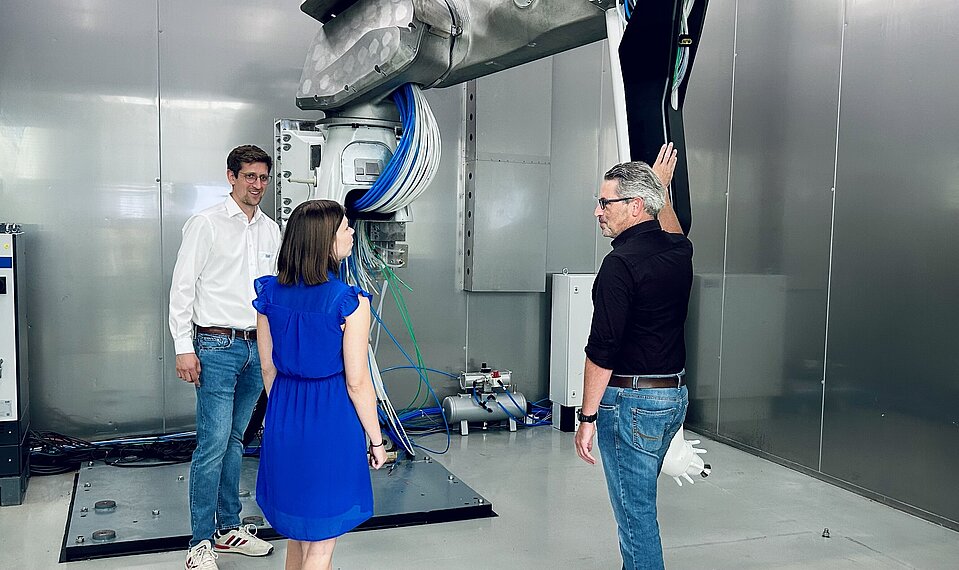
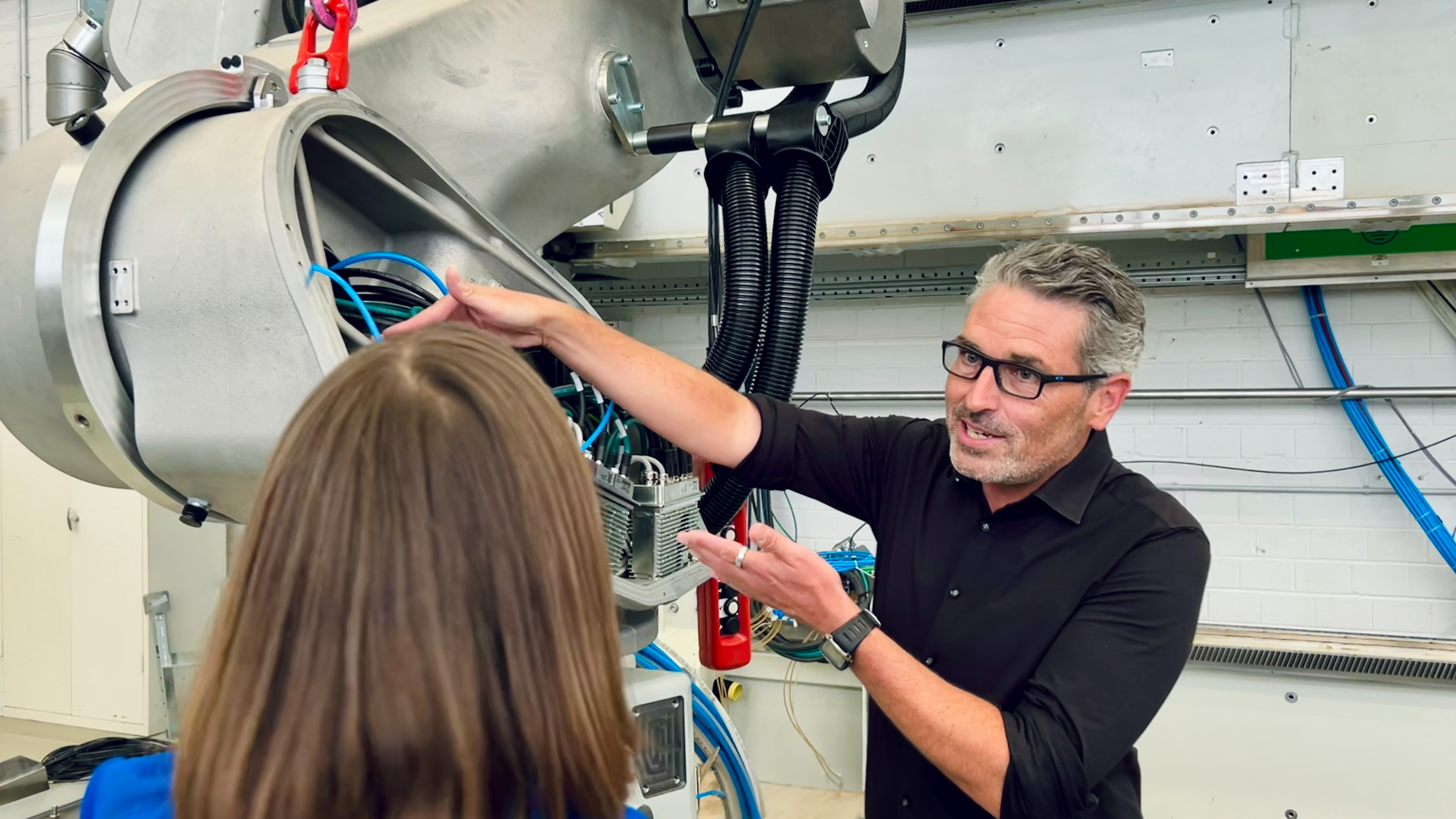
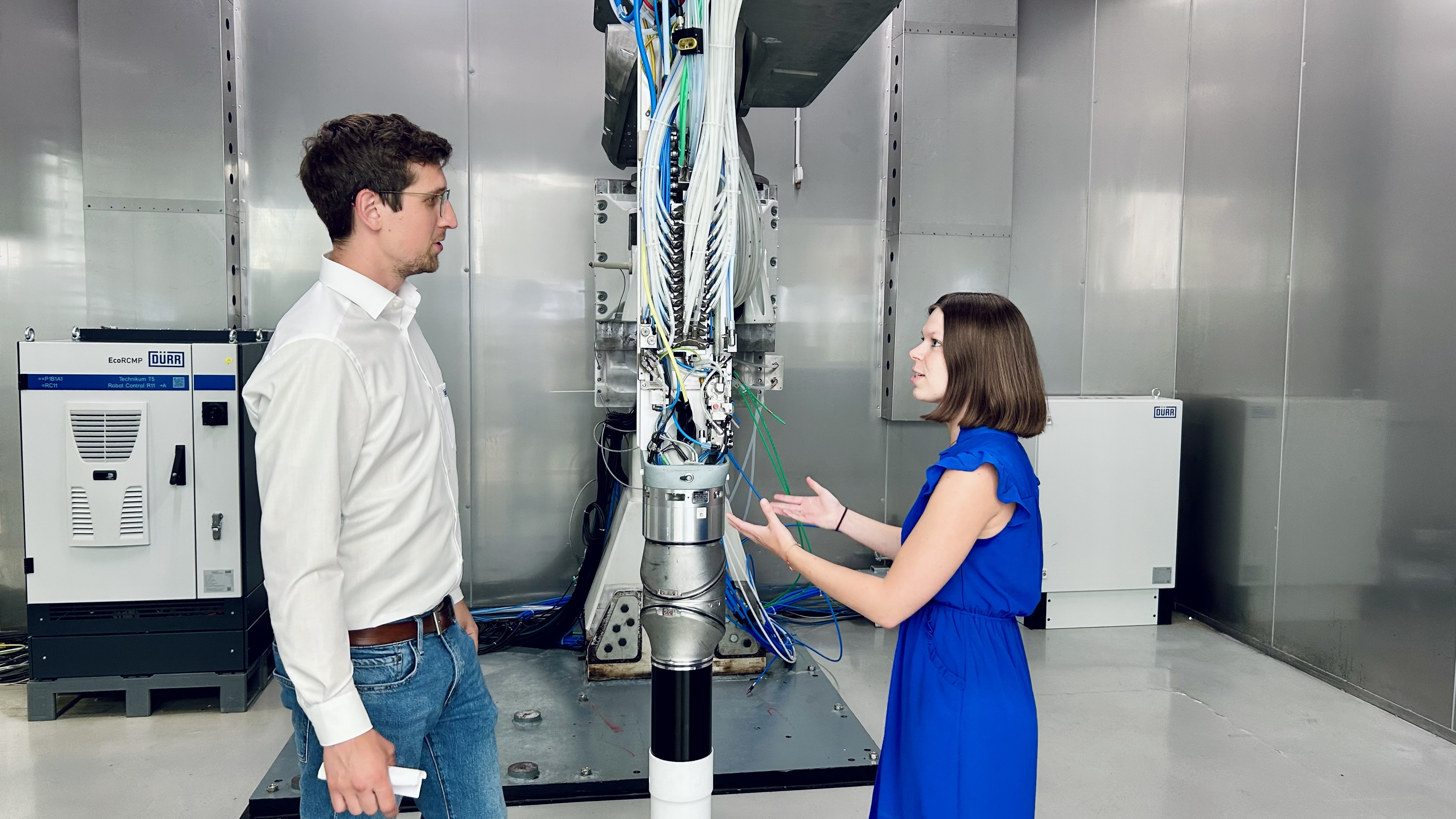
A conversation about the EcoRP4.
And what technological innovations are incorporated into the EcoRP4 that set it apart from previous Dürr robots?
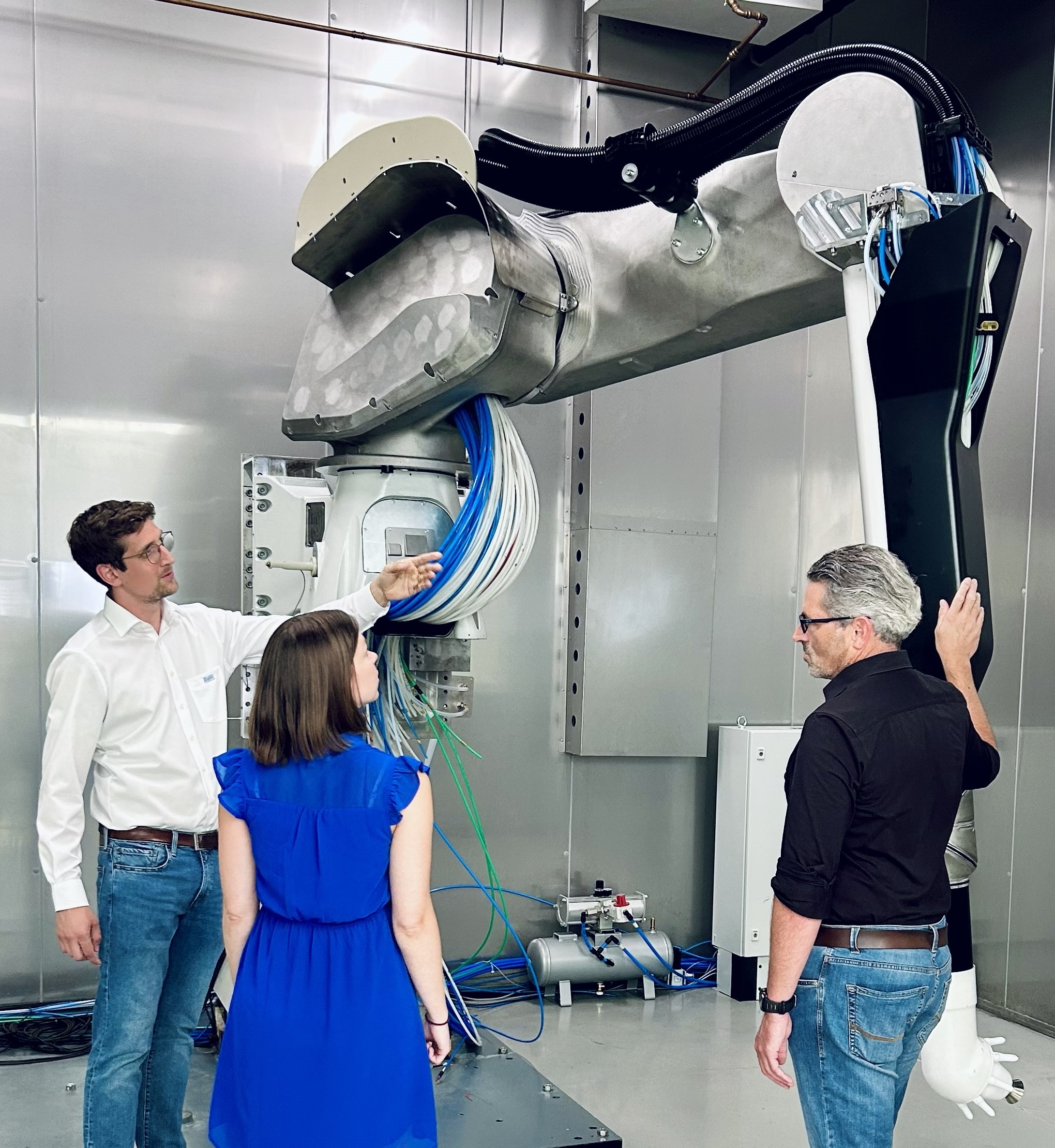
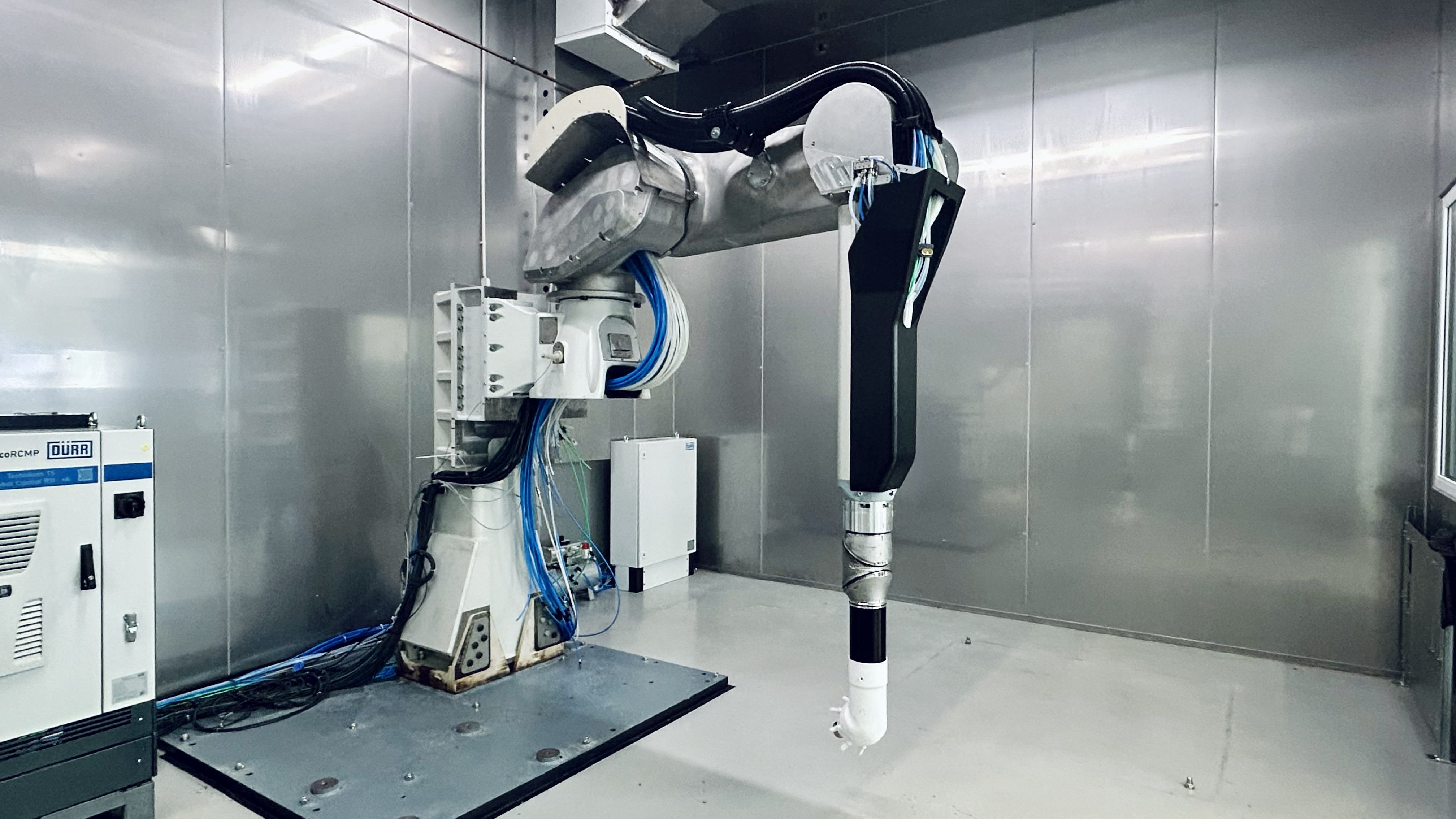
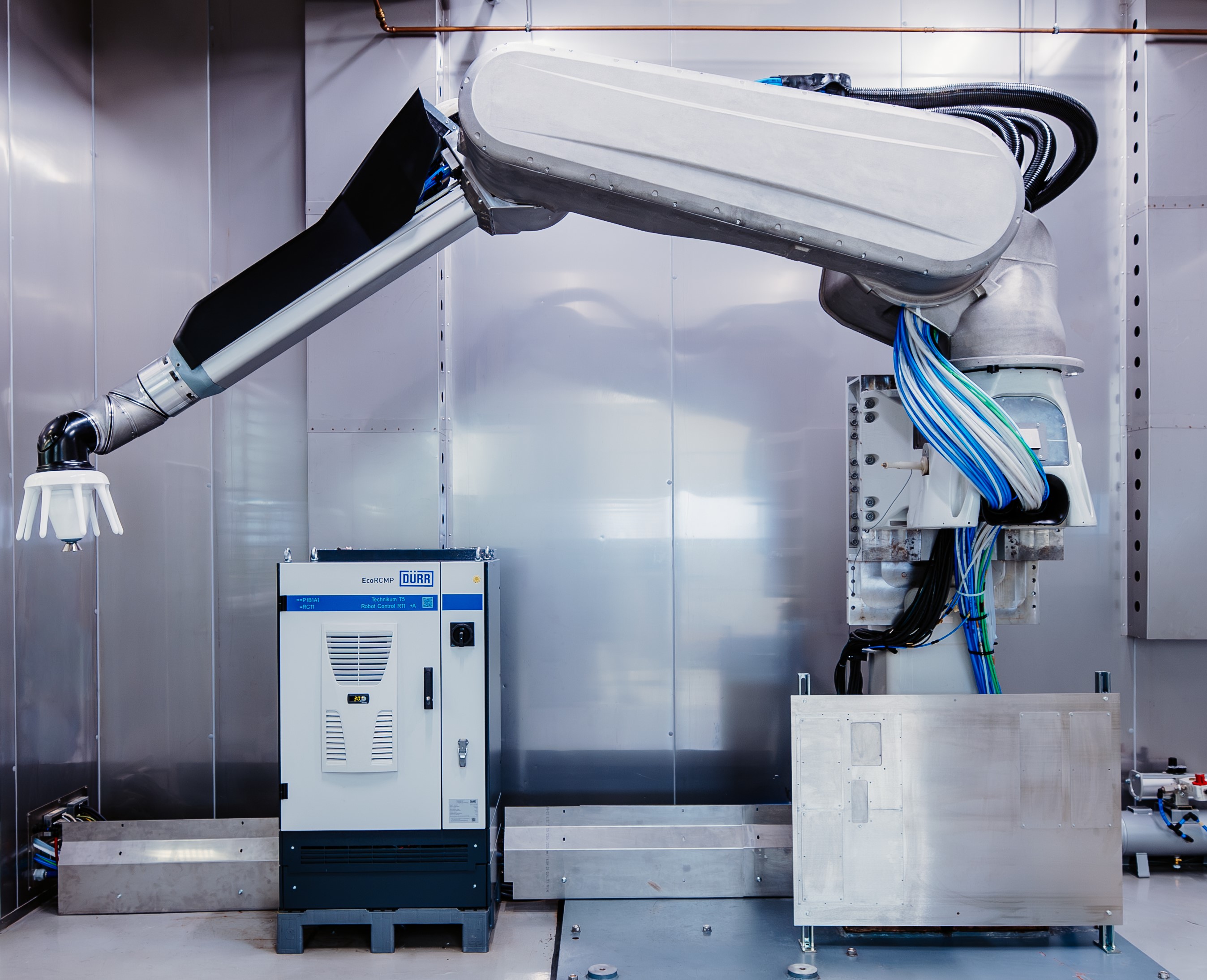
Andreas Collmer: One example, is we developed new, simplified drive systems, thereby fundamentally optimizing the mechanical design. Another key factor was the close collaboration between our robot simulation team and the robot mechanics development department which began quite early in the process. This allowed us to move arm 1 significantly further outward. As a result, the robot now has an asymmetrical design. This is rather atypical for us. Accordingly, arm 2 is no longer centered but is slightly offset from the main axis. For industrial robots, this is a unique selling point. The advantages: We were able to significantly reduce the interference contour on one side, which helps prevent collisions with the car body and allow the robots to reach hard-to-access areas much more easily.
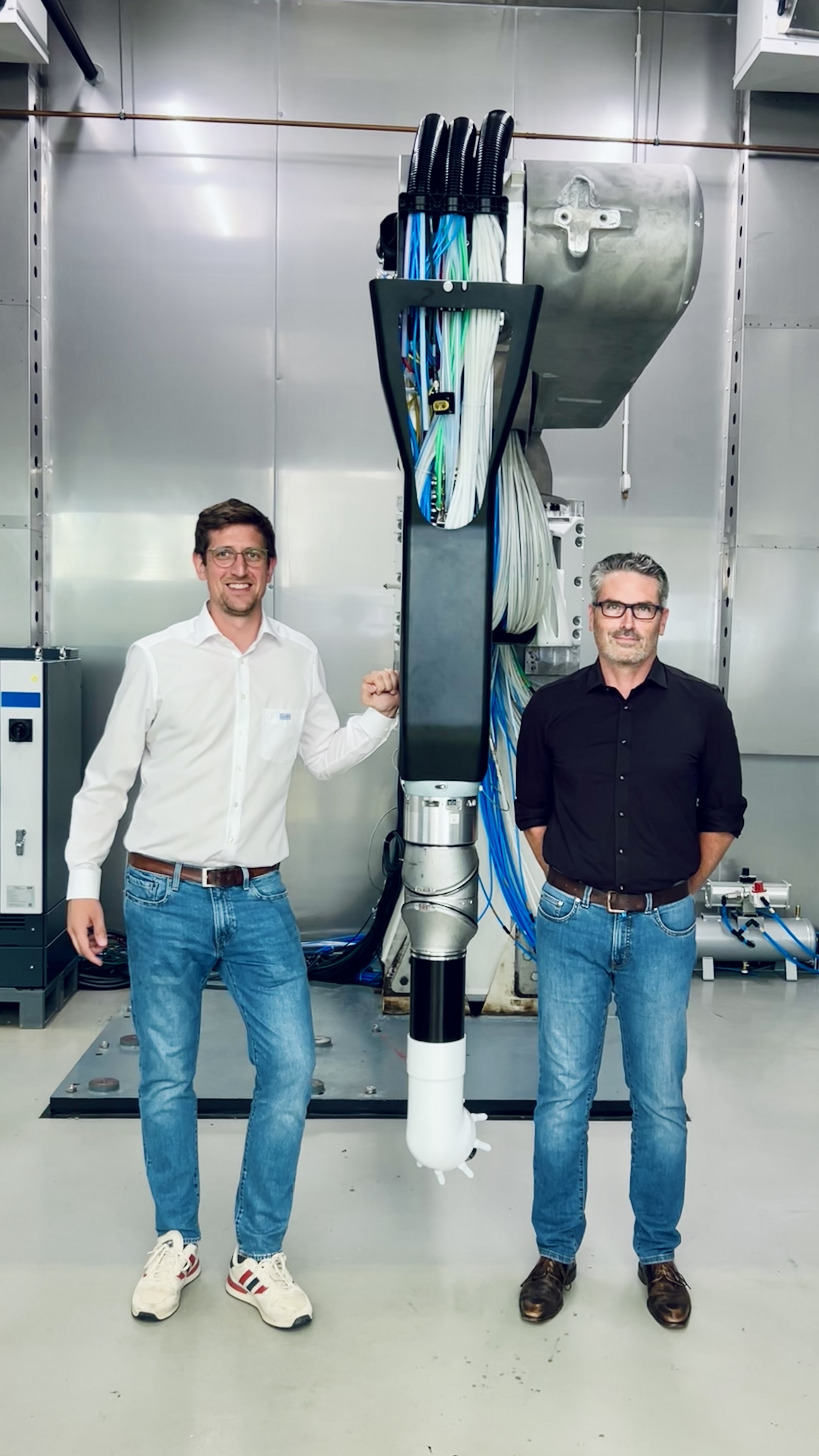
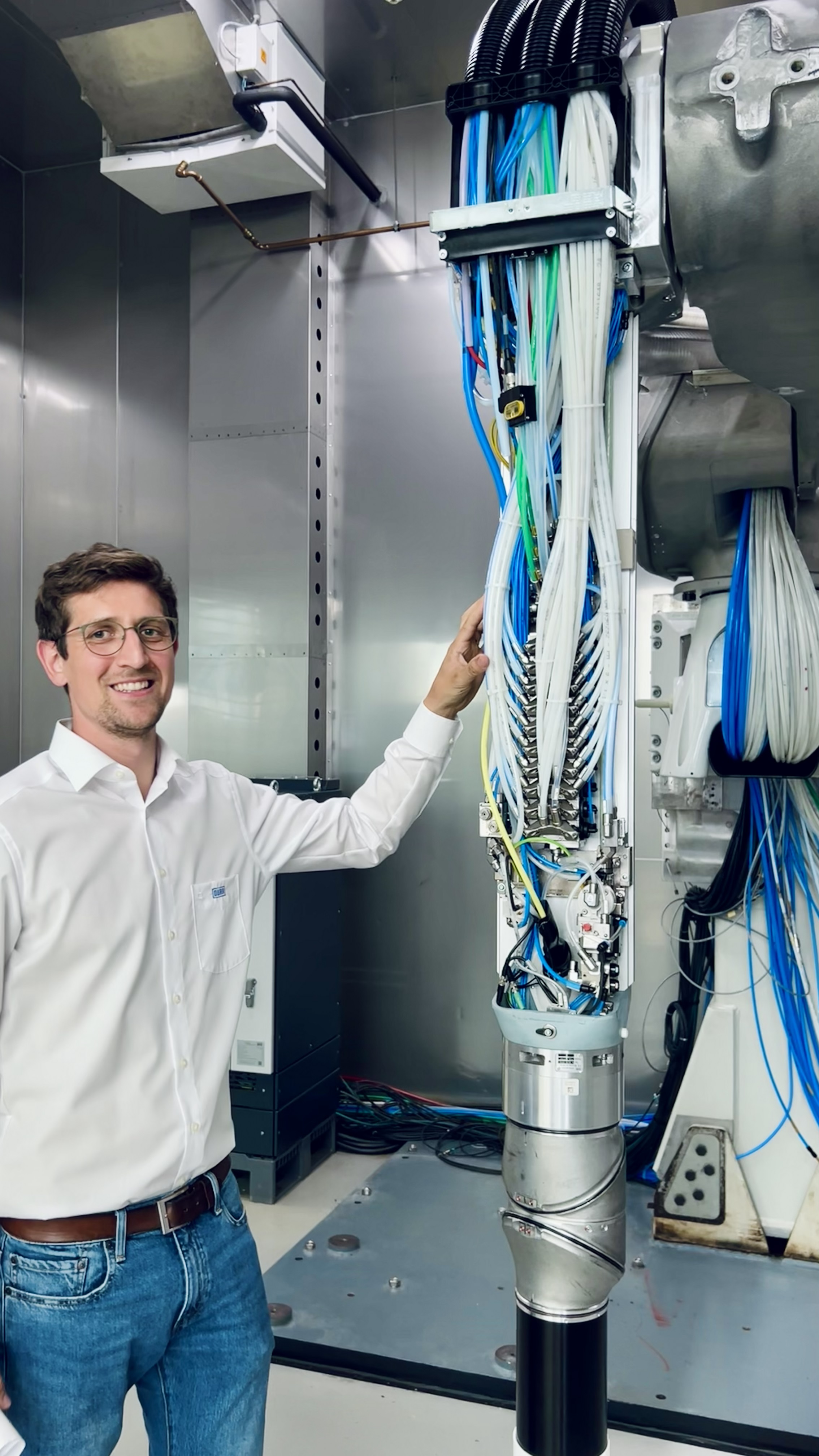
Stephan Kilpper and Andreas Collmer were involved in developing the robot.
Mr. Kilpper, how did the idea to model the robot after a crab come about?
Stephan Kilpper: Through close collaboration among all departments involved, we developed the concept of deliberately asymmetric kinematics to improve reach and flexibility. We later came across the crab by chance during a meeting while reviewing the robot simulation. We found the analogy to our concept simply spot-on. Asymmetry in itself is nothing new in robotics. However, we quickly realized that an asymmetrical arm 1 – which carries the application technology at Dürr – creates too large a range of motion. That’s why we offset arm 2 from the center outward, so that arm 1 can be positioned more centrally again. At the same time, we optimized the hose bundle routing, which makes arm 2 significantly slimmer. Our reachability studies show that the off-center arm 2 offers advantages, especially for interior painting surfaces.
AND WHAT'S THE STORY BEHIND THE ROBOT'S MIRROR IMAGE?
Stephan Kilpper: Most objects to be painted, such as vehicles, have an axis-symmetric design. For example, while the driver’s door and passenger door look the same, they are mounted in a mirrored configuration on the body. You can’t simply swap them. In the paint shop, the vehicles are moved through the booths in the direction of travel, while the robots are positioned on the side. If a robot itself is asymmetrical, it behaves differently on the left side of the vehicle than on the right and might be able to reach one side better than the other. To ensure the same level of accessibility on both sides, we mirror the robots. This way, the robots on the left and right are identical relative to the vehicle. As a result, the painting program can also be completely mirrored. This significantly reduces the effort required for programming, optimization, and maintenance while ensuring consistently high paint quality.
The EcoRP4 is compatible with all Dürr application products designed for it.
What specific benefits does the new robot offer customers?
Andreas Collmer: There are several. The simplified drive systems and reduced number of gearboxes result in less overall play, which directly translates to greater precision and rigidity. In addition, friction and inertia losses are reduced, as is energy consumption, which in turn lowers operating costs. The bottom line is that the system is significantly more efficient.
Stephan Kilpper: And we’re not just using fewer components. The remaining ones are also designed for greater robustness. This reduces the risk of failure and extends service life. At the same time, the reduced number of parts increases cost-effectiveness.
The mechanical design has been optimized for the new generation of robots.
How long did the process take, from the initial idea to finalization?
Stephan Kilpper: We were able to complete the robot’s concept phase in less than a year. During this time, we defined the requirements in the specifications and developed various solution approaches. The new kinematics were also developed on this basis. To meet the high demands placed on the new generation of robots, numerous specialized departments were closely involved in the process. The robot serves as the foundation for supporting the application technology. The actual development – from concept to beta-site readiness of the product – then took about two years.
Did you encounter any challenges during the development process?
Andreas Collmer: Yes, there were. Above all, consistently reconciling the many different requirements from the specifications was a major challenge. This wasn’t just about a single robot, but an entire family: The RP4 comprises a total of six different kinematics. The EcoRP4 meets all the defined technical and economic requirements we set for ourselves. Overall, I believe we’ve developed a truly cohesive total solution with the RP4 family.
CURRENTLY, MORE COMPANIES ARE SEEKING TO DEVELOP SUSTAINABILITY. HOW CAN THE ECORP4 BE INTEGRATED INTO THIS TREND?
Stephan Kilpper: For many companies, sustainability also means saving costs and making processes more efficient. The EcoRP4 supports this trend by enabling more sustainable production.
LET'S TALK ABOUT THE PAINTING PROCESS. HOW DOES THE ECORP4 CHANGE THIS FOR THE CUSTOMER?
Andreas Collmer: The EcoRP4 was developed to work optimally with the Dürr application products designed for this purpose. With regard to the latest application technology, with the EcoBell4 Basic we are High-Transfer-Efficiency (HTE) ready.
When can we expect to see the EcoRP4 in operation in the first production facilities?
Andreas Collmer: The EcoRP4 will be installed at the first customer sites as beta sites later this year. There, it will be able to demonstrate its advantages.
AND HOW WILL ROBOTICS FOR PAINTING TECHNOLOGY EVOLVE OVER THE NEXT FIVE TO TEN YEARS?
Stephan Kilpper: We expect robots to become even more flexible and better adapted to complex part geometries. Individual components will take on multiple functions, and more efficient manufacturing processes will be implemented. This will increase cost-effectiveness for our customers. In addition, we anticipate improvements that will further increase capacity utilization and the degree of automation.
The EcoRP4 is designed for greater durability, which also extends its service life.
What makes you most proud when you look at the finished robot today?
Stephan Kilpper: I’m particularly proud that we’ve successfully implemented many new concepts – even in areas where we deliberately deviated from established solutions to achieve our goals. The robot is the central link in this process. This success was only possible thanks to the close collaboration of many specialized departments and the team’s great dedication. The result is a robot that is optimally tailored to its areas of application. And we’re just getting started: The EcoRP4 already offers great potential to become even more flexible and powerful in the future.
Thanks to its asymmetrical design, the robot can now easily reach even hard-to-reach places.
To wrap up, let’s get a little more personal. Do you both have a favorite Dürr robot?
Andreas Collmer: All the robot generations I’ve had the privilege of developing for Dürr so far are my favorites. I’ve poured my heart and soul into each one. That makes me even more excited for what’s to come. Developments like these are only possible through close, collaborative work across many departments. I’d like to take this opportunity to express my sincere thanks to everyone involved.
Stephan Kilpper: Without a doubt: the EcoRP4. It’s the first project where I was able to take on the role of project manager and oversee the entire process from the initial concept to the finished product. This close connection makes it very special to me. As I mentioned earlier, many teams were involved in the development. Without this collaboration, it wouldn’t have been possible.
We use cookies, similar technologies and tracking services
This website uses cookies, similar technologies and tracking services (hereinafter referred to as “Cookies”). We need your consent for Cookies, which not only serve to technically display our website, but also to enable the best possible use of our website and to improve it based on your user behavior, or to present content and marketing aligned with your interests. For these purposes, we cooperate with third-party providers (e.g. Salesforce, LinkedIn, Google, Microsoft, Piwik PRO). Through these partners you can also receive advertisements on other websites.
If you consent, you also accept certain subsequent processing of your personal data (e.g. storage of your IP address in profiles) and that our partners may transfer your data to the United States and, if applicable, to further countries. Such transfer involves the risk that authorities may access the data and that your rights may not be enforceable. Please select which Cookies we may use under ”Settings”. More information, particularly about your rights, e.g. to withdraw consent, is available in our Privacy Policy .