Whether it is a critical call from a customer in the middle of the night or an entire high-bay warehouse suddenly coming to a standstill—for Felix Kremen, moments like these are part of his everyday life. For customers, such a moment means downtime, lost time, production pressure, and the question of how quickly reliable help will arrive. For over ten years, he has been ensuring that everything that needs to run on Dürr’s DXQ software solution runs smoothly. As an IT Support Specialist, he is a technical all-arounder: someone who delves deep into complex systems, understands structures, uncovers errors, and finds solutions where others see only data noise.
It is just past eight o’clock when Felix Kremen opens his laptop. A fresh cup of coffee is within reach as the computer boots up. “The first few minutes are always the same,” he says. “Check emails, open Teams, and see what’s most urgent today.”
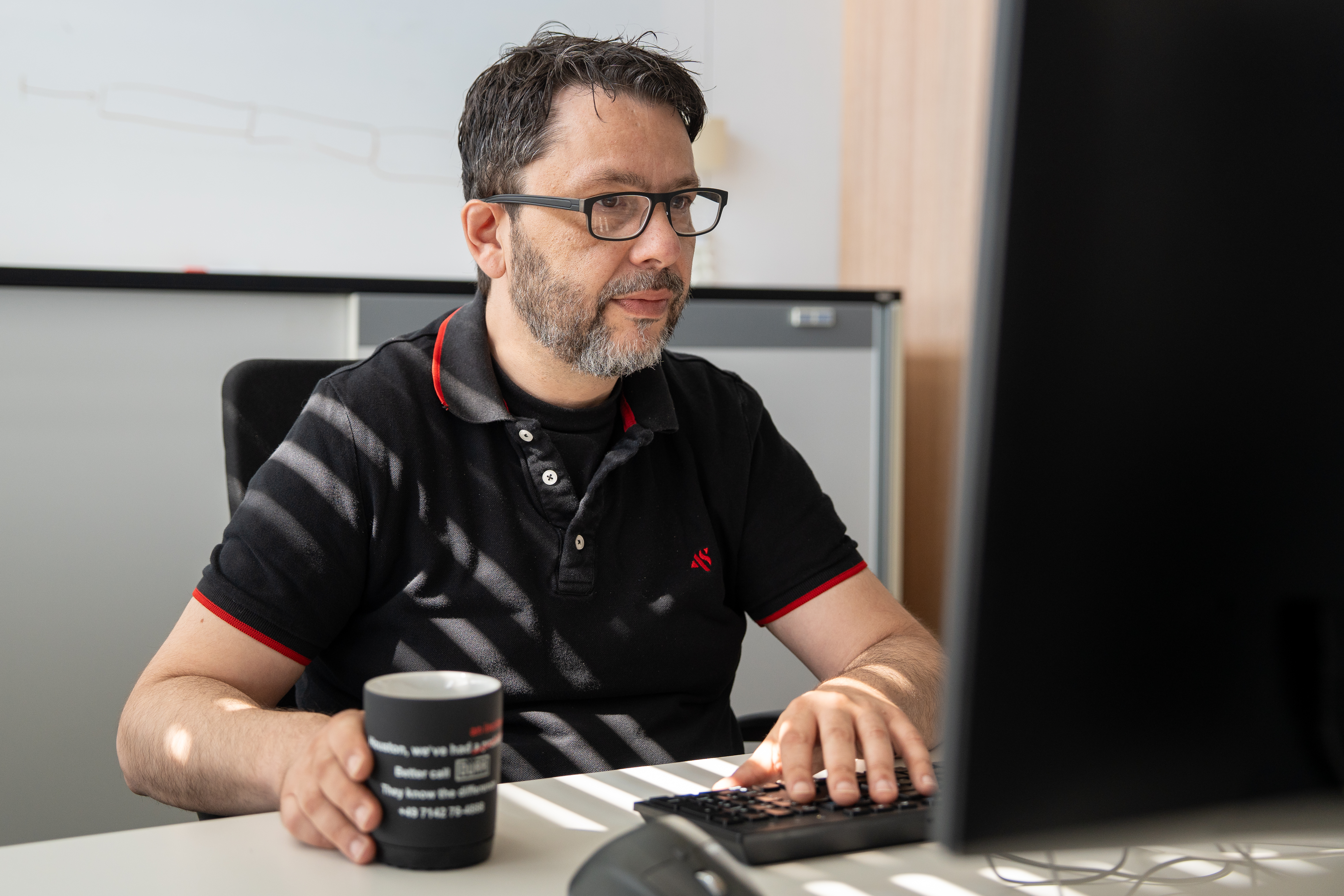
Combining experience with technical expertise, Felix identifies the root causes of complex issues.
From Commissioning Engineer to DXQ Expert
Felix has been familiar with the digital world of Dürr for a long time. As early as 2012, he was working as an external commissioning engineer and used the predecessor product, EcoEMOS. He has been a permanent member of the team since 2018 and has actively witnessed the transition to today’s software solution, DXQ. His work often begins where others have reached a dead end. Today, he is one of the main points of contact for anything in support that is urgent, critical, or unclear.His responsibilities range from minor technical inquiries to complex cases that can have an immediate impact on production. For customers, this means that every decision made by support can mean the difference between a few minutes of downtime and a longer production outage.
But his responsibilities extend far beyond that. He supports ongoing system projects, handles migrations independently, and acts as a technical advisor to the sales team during customer meetings. In addition, he manages the administration of DXQcontrol and is on call—even outside regular working hours—for production-critical incidents.
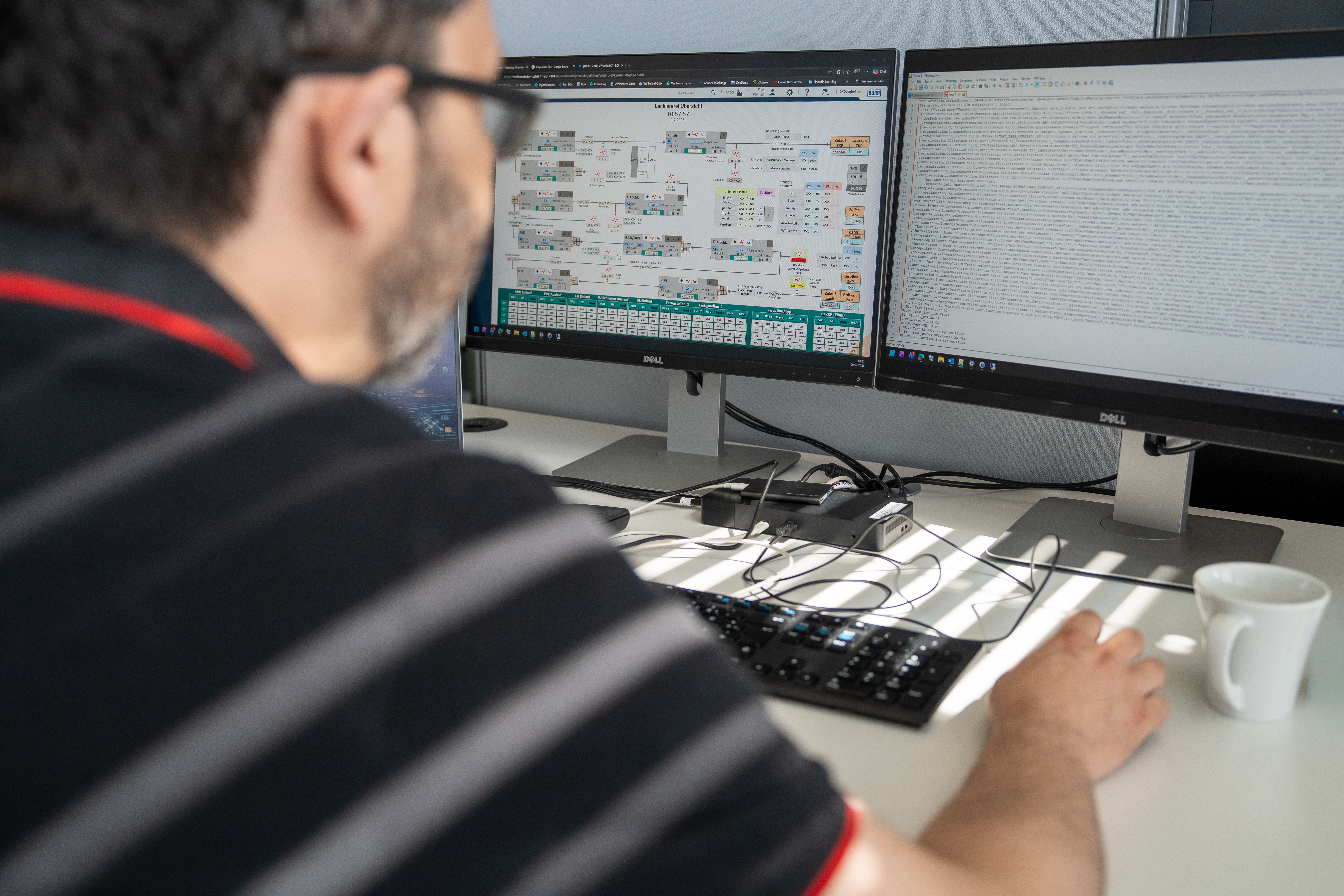
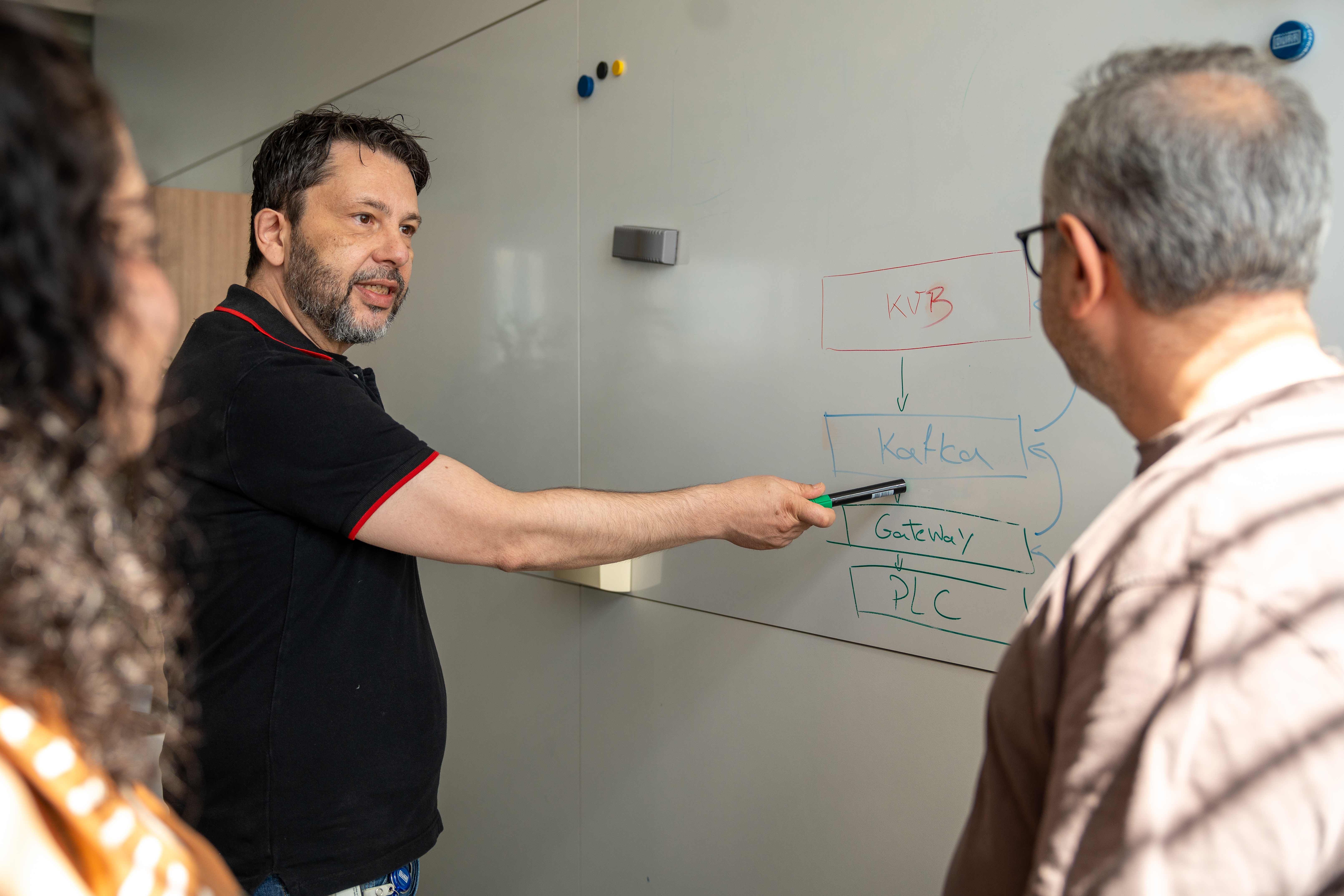
For Felix, the search for the root cause often begins with a closer look at the data on screen.
When Support Turns into a Detective Game
At 9:30 a.m., Felix joins the daily team meeting. Cameras turn on, colleagues dial in. A brief discussion of ongoing cases and a few organizational points before he returns to his pending technical tasks. A set routine? That ends right here. Because his job is reactive. The requests Felix receives vary widely. In recent weeks, Felix has had to familiarize himself with complex system landscapes—from challenging installations to downtime in automated warehouse systems to hard-to-trace discrepancies in material flow.
All these situations demonstrate just how deeply DXQcontrol is embedded in the plant. The system does not just detect individual signals; it understands the interconnections between processes, components, and workflows. When something goes off track, this digital nervous system kicks in, making it clear: Now we need someone who understands the system and can read the software language. Especially in critical cases, the tension in conversations becomes palpable. “And that’s exactly when you notice it slowly easing up again,” says Felix. “When you find a solution together and even end up laughing again—that’s always a very liberating moment.” It is precisely these moments that are the highlights of his job. When a production-critical problem is solved and customer satisfaction noticeably returns.What Felix finds particularly appealing about his work is the mix of technology, analysis, and teamwork. “Sometimes a complex project really feels like detective work,” he says. “You follow clues, rule out possibilities, and when you untangle the knot, it’s very rewarding.”
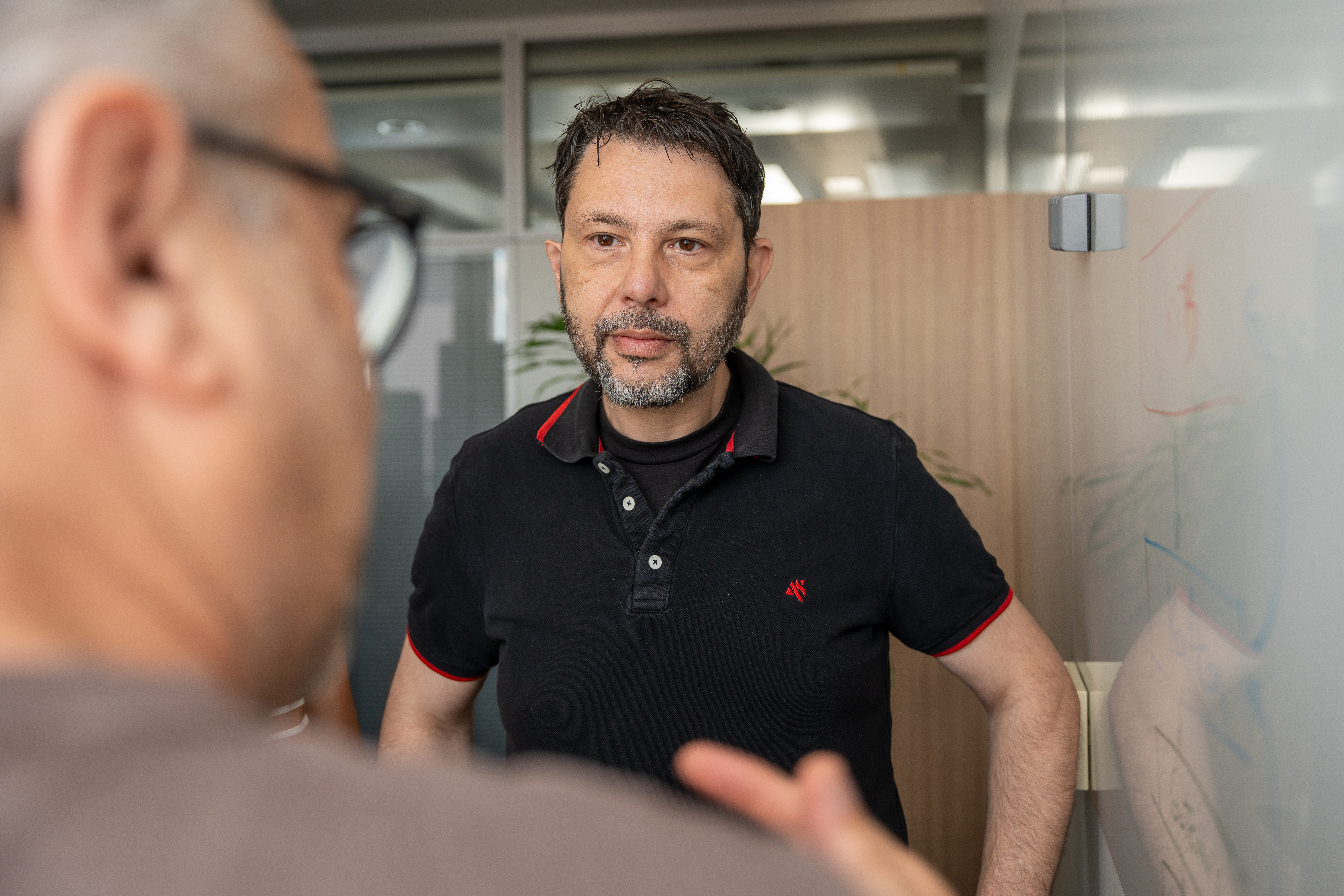
The best solutions often emerge through close collaboration and discussion.
A Ticket That Sticks in the Memory
Some requests really stick to your memory. Unfortunately, one request reached Felix during the Christmas party. Right in the middle of the festivities, a call came in about massive disruptions in a production-critical system. It quickly became clear: This was not going to be a quick fix. More colleagues were brought in; the analysis went on for hours, and the ticket had to be escalated across multiple levels.
In the end, the cause could not be determined. Instead of a final solution, the only option was to switch to a redundant system to safeguard production. “That’s one of the few critical cases we were unable to either fully resolve or explain,” says Felix. That is precisely why it has stayed with him to this day.
Situations like these are particularly challenging—especially when they happen in the middle of the night. Support calls outside of regular business hours are always critical; otherwise, they would not come in. “You have to be fully present from one minute to the next and grasp complex issues,” says Felix. At the same time, you must assess whether a problem can be solved on your own or whether other colleagues need to be brought in—even if that means waking them up.
Following the clues together: Many support cases are like real detective work.
Knowledge You Cannot Look Up
Felix’s expertise is the result of many years of hands-on experience. During the commissioning phase, he was mentored by experienced project managers who introduced him to both technical topics and analytical work. Added to this is his own curiosity. On longer project assignments, he scrutinized every file, every spreadsheet, and every process to fully understand the systems. Over the years, this has led to a deep understanding of workflows, interrelationships, and typical sources of error.
Felix can usually identify minor error patterns right away. He quickly recognizes typical causes and knows where to start. For more complex cases, he works closely with his team. Everyone has different strengths and different modules they know particularly well, and by working together, they usually find a solution.
If a problem turns out to be a software bug, he documents it thoroughly and passes it on to the development team. Felix handles many tasks on his own, and he also spends the entire day communicating with customers and colleagues. It is precisely this collaboration that he believes is a major part of their success.
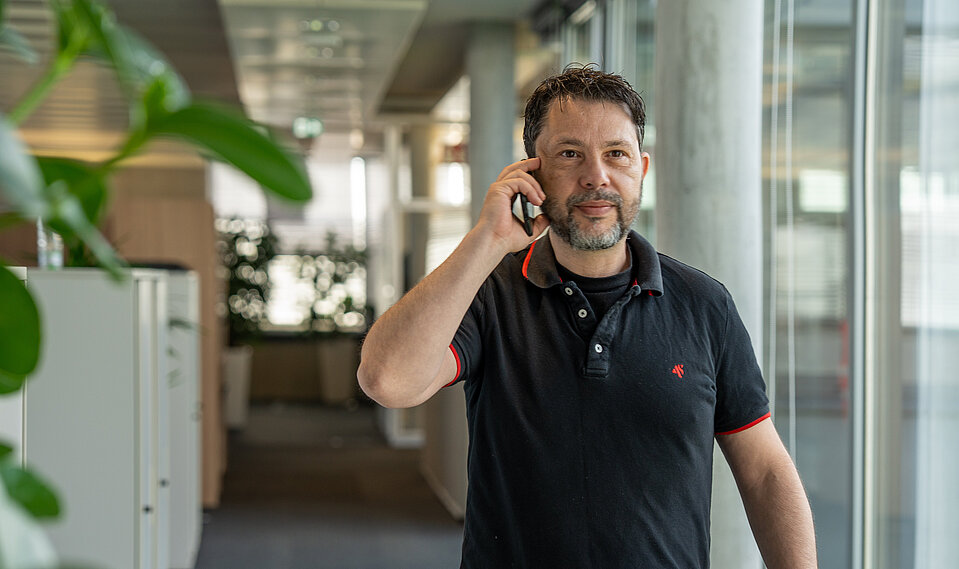
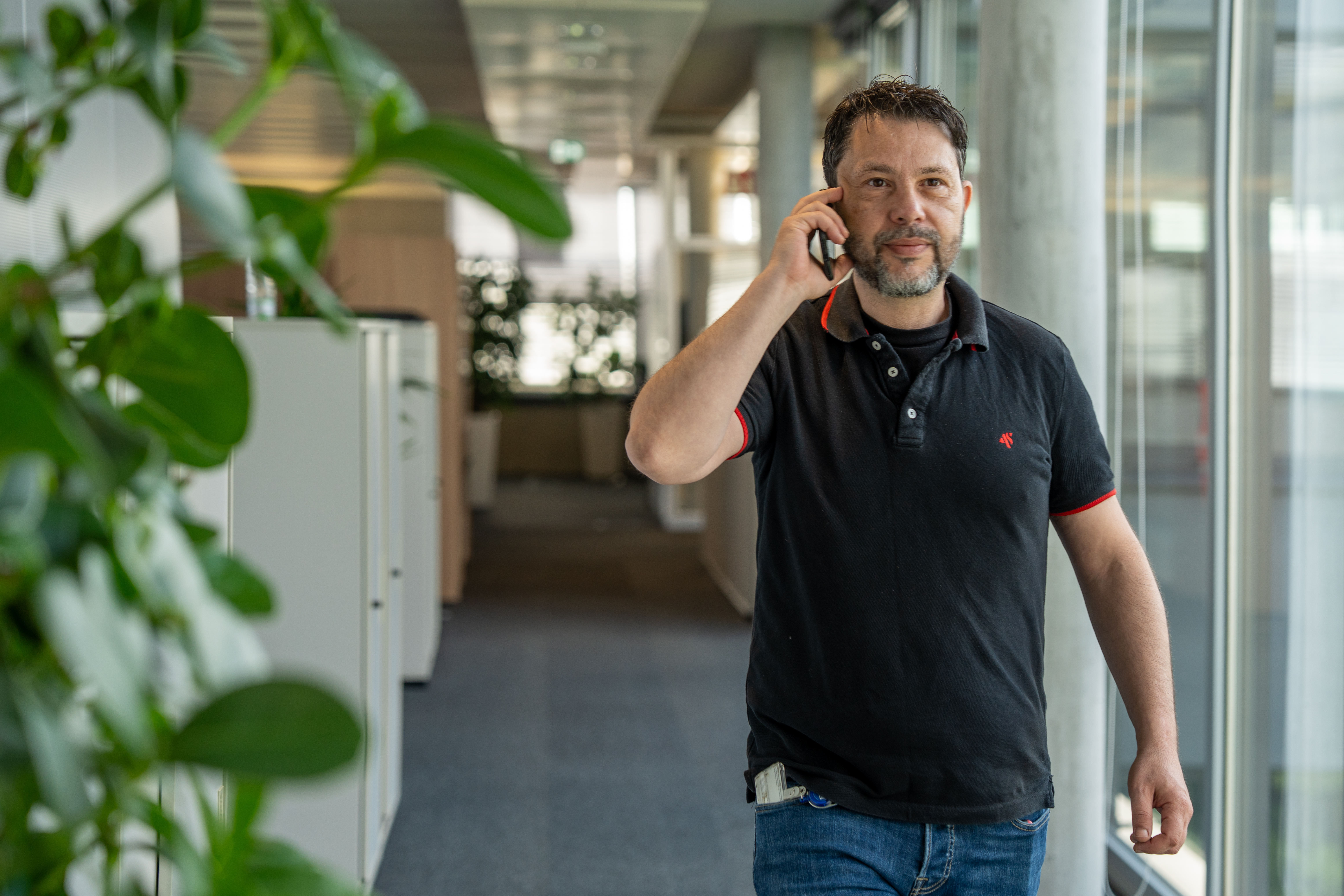
One phone call is all it takes: Felix helps customers resolve critical DXQ issues.
A daily routine without a set pattern, yet with a rhythm of its own
Even though no two days are alike, small rituals have crept in. A quick breakfast from the bakery before the daily stand-up is one of them. Lunch break? He usually skips it—the fast pace of support work rarely leaves room for one. Felix works primarily remotely. For him, it is not about the location, but the solution. Whether he is working from home, in the office, or on call—what matters is that customers get support quickly. Especially in support, he sees every day just how well remote work functions. After work, Felix finds his haven in music. Whether it is bass, piano, or guitar: here, a different rhythm takes hold, far removed from databases and error messages. The combination of creativity and technical precision offers him the perfect balance to the demanding moments in support. And it is precisely this blend of technical understanding and experience that makes all the difference in his day-to-day work—in collaboration with DXQ; it ensures that systems run reliably.
Expert/Project Manager Construction Coordination (m/w/d)
People at Dürr
IN THEFRAME
3 questions with
Sebastian Jochum
Product manager gluing technology
Where is gluing technology used?
We primarily serve the automotive and supplier industries, as well as selected sectors of general industry. Key applications include structural bonding, sealing, thermal interface materials, and processes in body shop and battery manufacturing.
Which sustainability trends are shaping gluing technology?
Key sustainability trends include compressed-air-free production processes and reducing material consumption, particularly in battery manufacturing.
What makes Dürr’s gluing technology unique?
Thanks to our modular system, we can cover many processes with a single pump and control platform. Our standardized solutions are easy to integrate and enable dispensing volumes ranging from microliters to liters.
We use cookies, similar technologies and tracking services
This website uses cookies, similar technologies and tracking services (hereinafter referred to as “Cookies”). We need your consent for Cookies, which not only serve to technically display our website, but also to enable the best possible use of our website and to improve it based on your user behavior, or to present content and marketing aligned with your interests. For these purposes, we cooperate with third-party providers (e.g. Salesforce, LinkedIn, Google, Microsoft, Piwik PRO). Through these partners you can also receive advertisements on other websites.
If you consent, you also accept certain subsequent processing of your personal data (e.g. storage of your IP address in profiles) and that our partners may transfer your data to the United States and, if applicable, to further countries. Such transfer involves the risk that authorities may access the data and that your rights may not be enforceable. Please select which Cookies we may use under ”Settings”. More information, particularly about your rights, e.g. to withdraw consent, is available in our Privacy Policy .