Three weeks. No second chances.
Two projects, one common goal
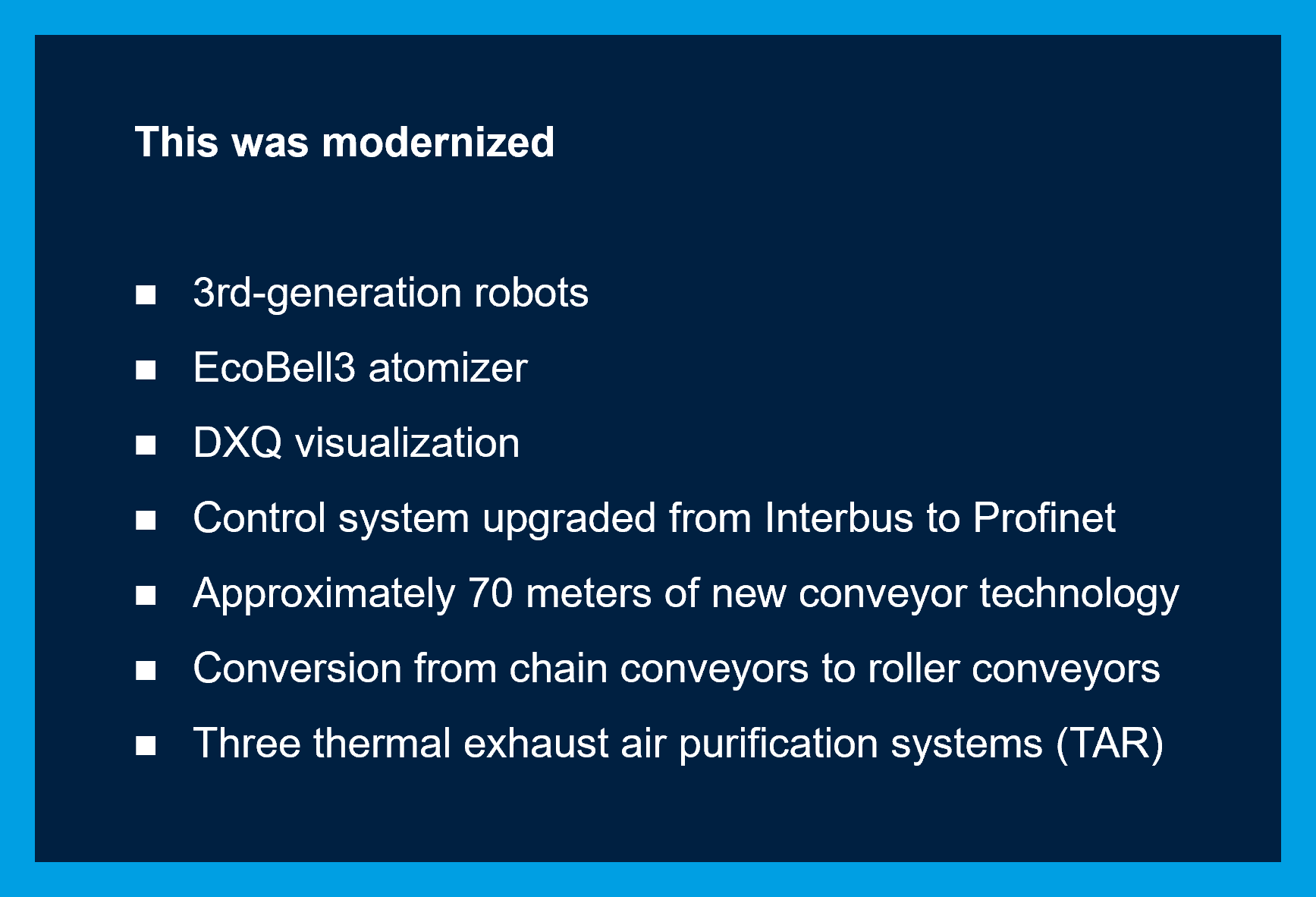
In Hall 9, the Dürr team faced two major modernization projects. First, three topcoat stations—including robotics, application technology, conveyor systems, and software—were to be upgraded. In addition, three thermal exhaust air purification systems (TAR) were to be modernized: one for the topcoat area and two more for the cathodic dip coating line. Both projects were driven by the same need: the existing systems had reached the end of their technical service life. Increasing breakdowns and an increasingly difficult supply of replacement parts made it clear that a comprehensive modernization was necessary to ensure the long-term availability and production reliability of the paint shop.
Three Weeks—Every Minute Counts
As is always the case with retrofits during a plant shutdown, the biggest challenge lay not in the technology, but in the tight time frame. Originally, five weeks had been allocated for the work; later, this was reduced to four. In the end, only three weeks remained, during which every step had to go perfectly.
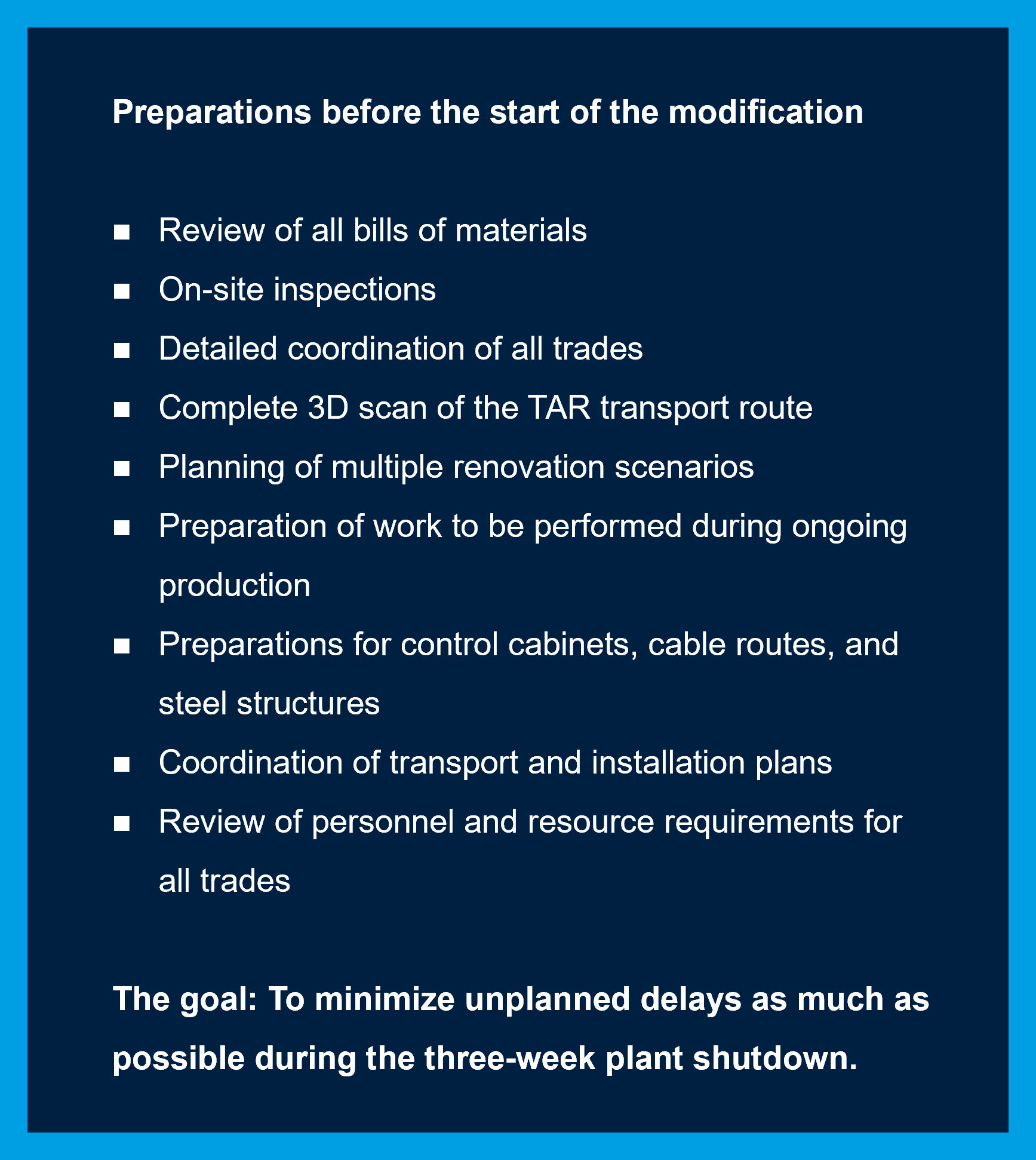
Preparations for both projects began months before the actual retrofit. The topcoat project began in October of the previous year, and the TAR project in February 2026. Short distances proved to be an advantage: Thanks to the Dürr Service Center in Wolfsburg, the teams were able to coordinate directly with Volkswagen on-site at any time, jointly inspect plant areas, and quickly resolve technical issues. Daily meetings were held during the retrofit phase; during critical phases, they even took place in the morning and evening.
At the same time, nothing was left to chance, and the preparatory work extended down to the smallest detail: control cabinets were relocated, cable routes were prepared, material supply systems were adapted, steel structures were erected, and transport routes were planned. “We discussed practically every screw in advance,” recalls Project Manager Christian Lörler. “During the retrofit period, we couldn’t afford any missing materials or major surprises.”
During the three-week production shutdown at Volkswagen, every hour counted. Existing equipment had to be dismantled, new components brought in, assembled, commissioned, and tested. At the same time, there was no traditional ramp-up phase: Production was to be available again immediately after the plant shutdown. Consequently, the Dürr project team was challenged to make many decisions directly on the job site while keeping the schedule, safety, and technical requirements in mind. “Projects like this demand far more than just technical expertise from everyone involved. They require teamwork, strong communication skills, flexibility, and the ability to make decisions even under intense time pressure,” says Project Manager Benjamin Wrede.
When centimeters make the difference
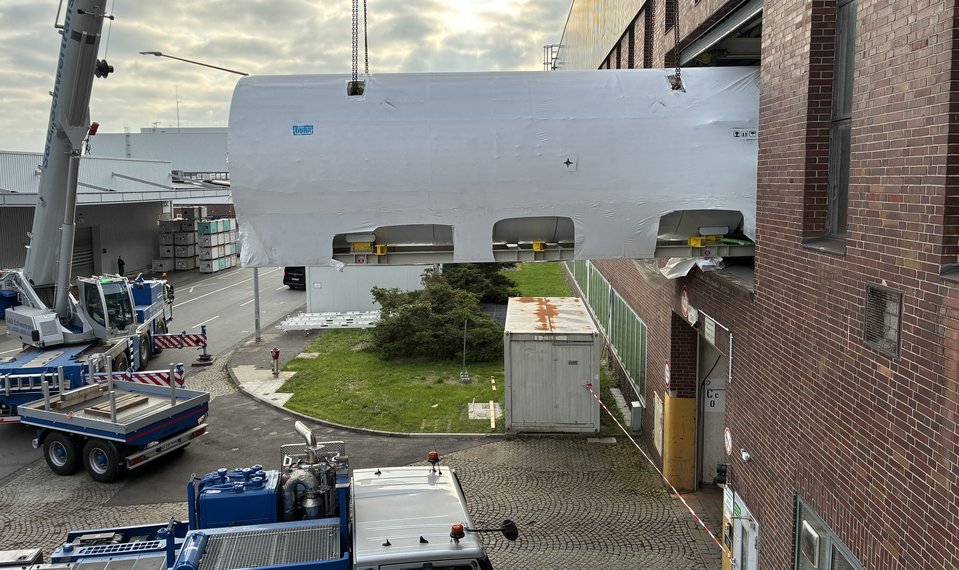
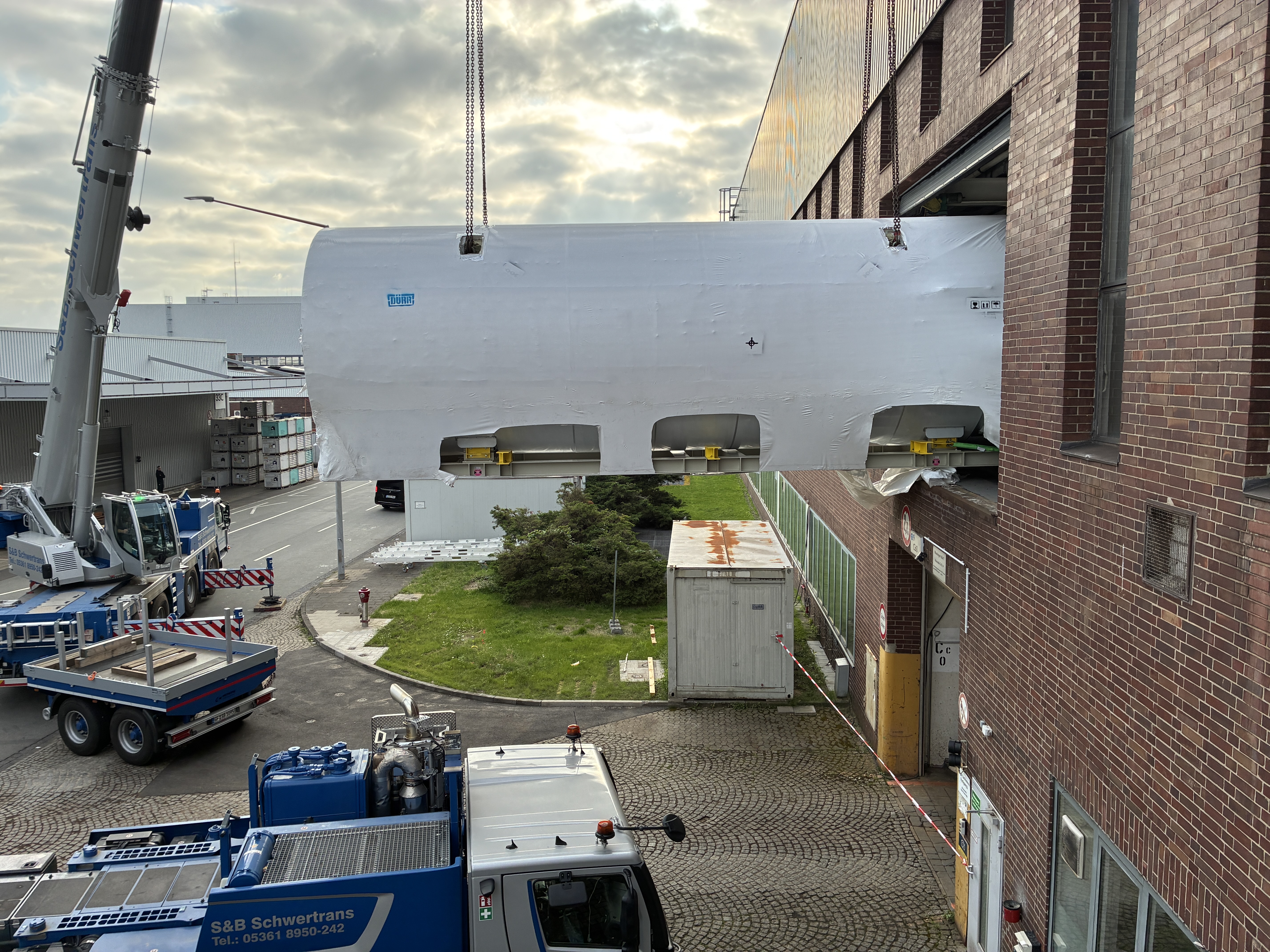
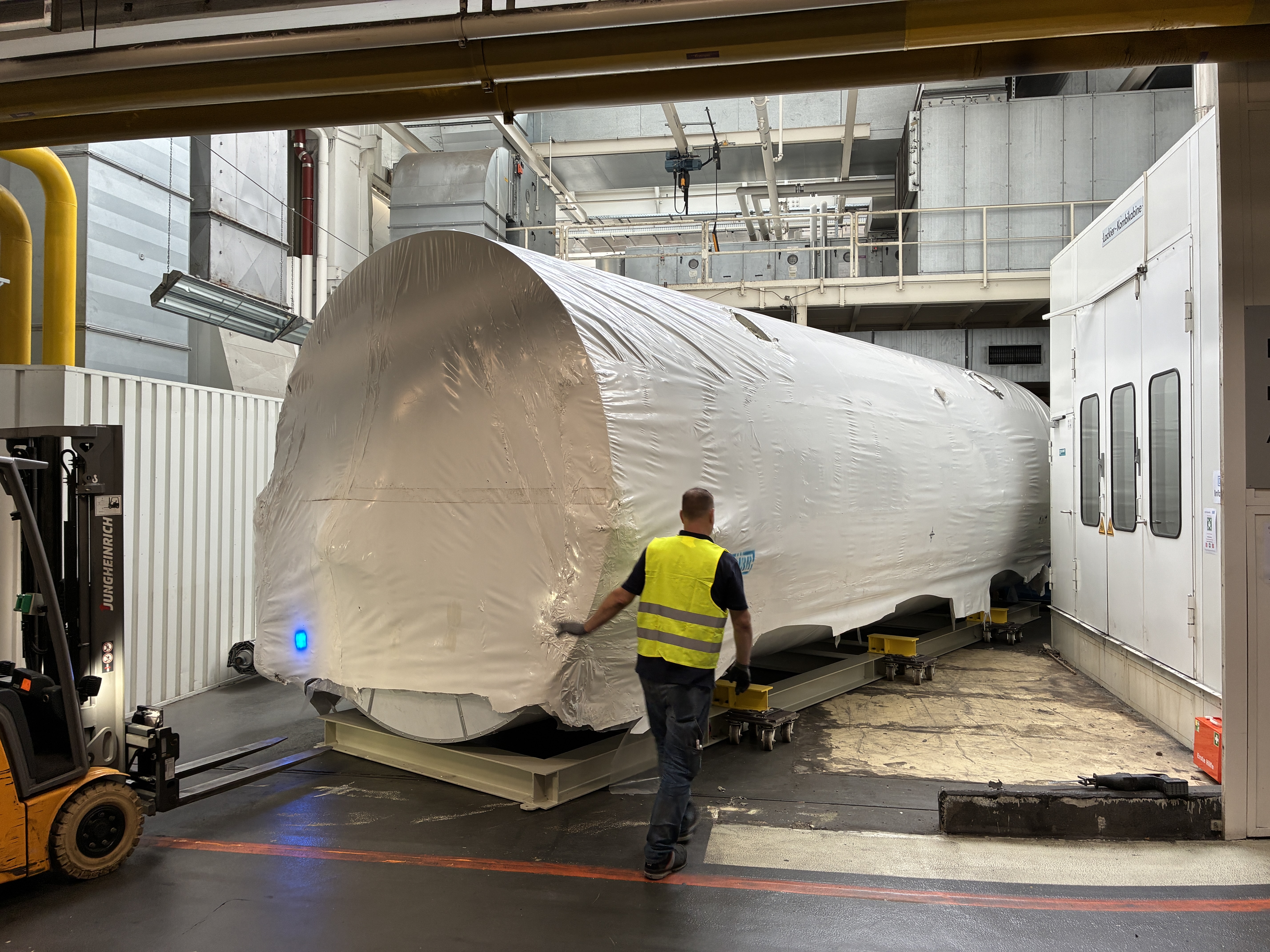
Replacing the thermal exhaust air purification systems proved to be particularly challenging. The units, weighing up to 18 metric tons, measuring about ten meters in length, and 3.6 meters in diameter, had to be brought in through an opening in the upper floor of the building. Seven people moved the units step by step through the hall for about 150 meters. The route took them through narrow areas, past existing equipment, steel structures, and conveyor systems. The Dürr team developed special heavy-duty casters for the transport. Since there was sometimes less than ten centimeters of clearance to the ceiling, the casters had to be designed to be extremely flat. In some places, there was only a few millimeters of clearance.
Always have a plan B in mind
The delayed ocean freight added to the tension. The new TAR systems were manufactured in China and transported by ship. Due to poor weather conditions and congestion in the outer harbors, it was unclear whether the components would arrive on time and whether the retrofit could actually take place. “I tracked the ships on a live map, sometimes daily. In the end, I even used a webcam to see when they were entering the Elbe,” recalls Benjamin Wrede.
But it wasn’t just the delayed ocean freight that required flexibility. Even during the renovation, the schedule was constantly changing. As with many brownfield projects, some tasks progressed faster than expected, while others required additional coordination. Added to this was the close interdependence of the two projects. Work on the primer and topcoat systems often overlapped. Certain commissioning steps could only be carried out after adjacent trades had completed their tasks. Accordingly, workflows were regularly adjusted and, in some cases, re-coordinated on a minute-by-minute basis.
A Successful Finish
For three weeks, work continued around the clock, seven days a week. At times, more than 150 people were working simultaneously on the construction site. The effort paid off: The new TAR systems were even handed over to Volkswagen three days ahead of schedule. At the same time, the topcoat team also achieved its quality goals faster than expected and completed the technical acceptance ahead of schedule. Just as important: There were no workplace accidents throughout the entire renovation phase.
Three weeks after the start, there was little trace left of the tension from the summer. What remained was the realization that successful brownfield projects require far more than just new technology: precise planning, quick decisions, and strong teamwork make all the difference.
FURTHER RELATED
ARTICLES

What is special about Dürr's vertical farming method?
use of sunlight
plant growth in the dark
method of propagation
nutrient water
Read more
Back to Quiz
The vertical high-tech farm EcoY is a new high-yield cultivation method that combines innovation, sustainability and resource optimization. The Controlled Environment Agriculture (CEA) approach serves as the basis. However, the Dürr development relies on sunlight, glass and patented plant tubes, setting it apart from previous vertical farming concepts.


Electrification with Dürr
Why automotive manufacturers should shift to electrical heating

Nanofiltration: Tested and proven
Sustainable filtration for modern cathodic dip coating systems