Smart AC makes air conditioning more efficient
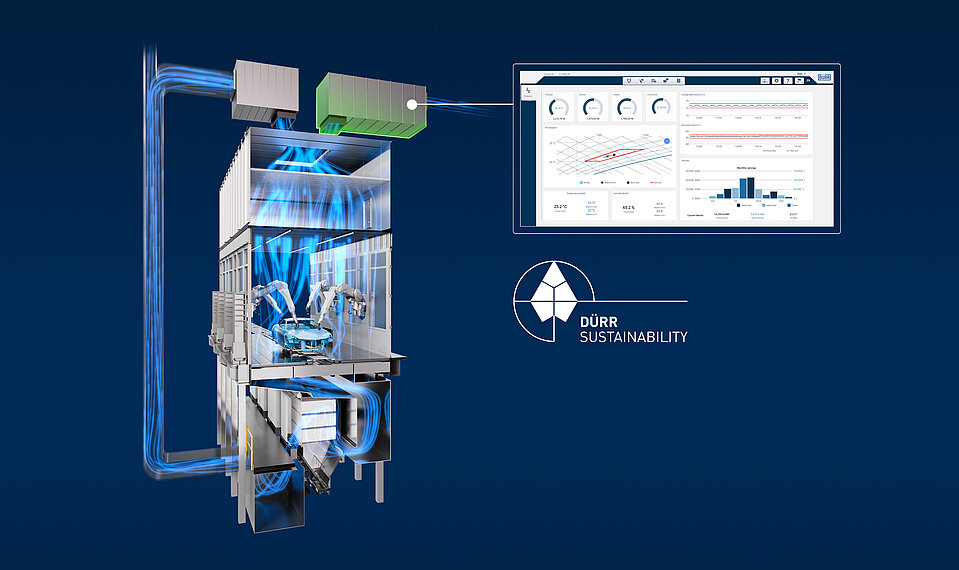
Intelligent air conditioning becomes a driver of efficiency
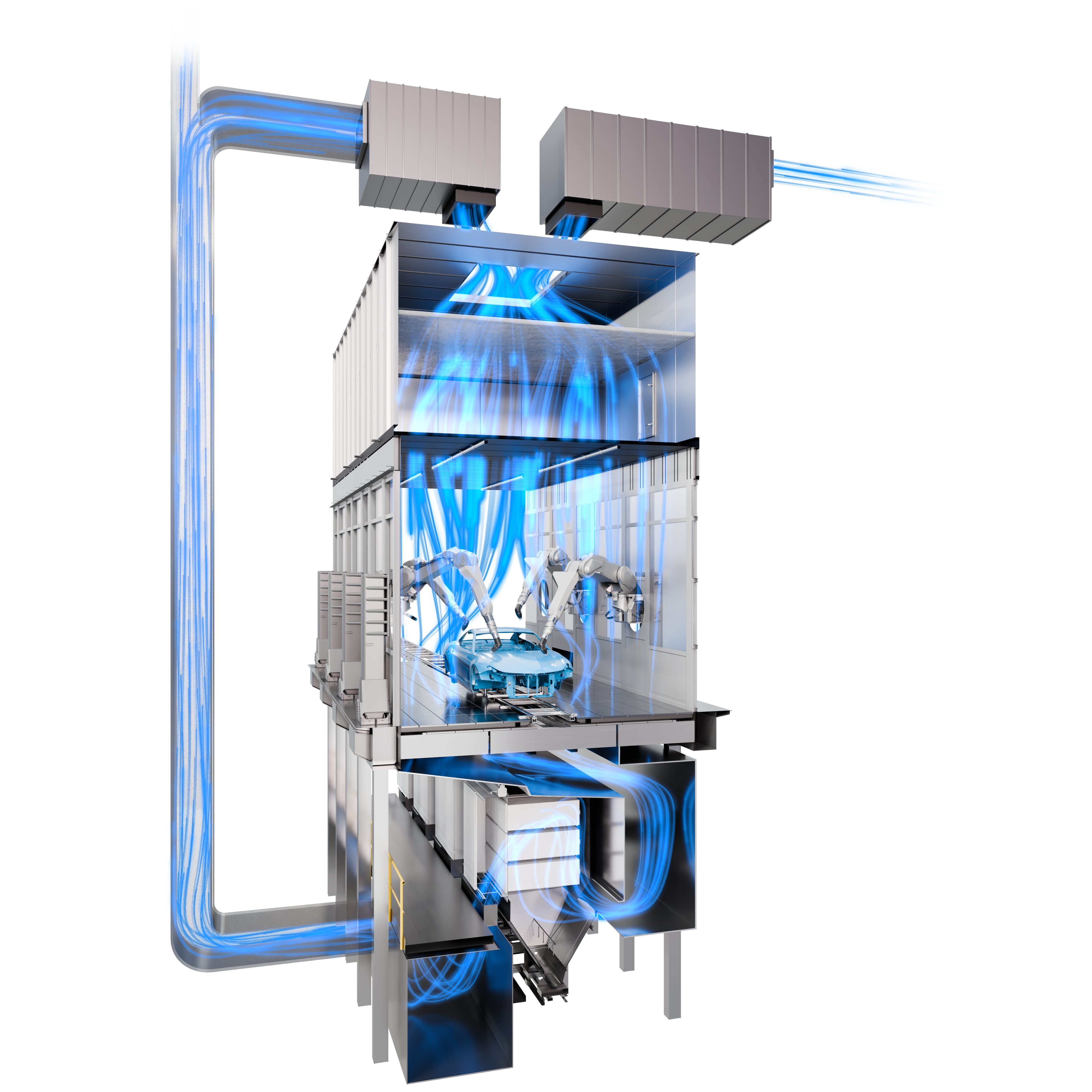
“The Smart AC (Air Conditioning) software module, which is part of DXQequipment.analytics, makes air conditioning more energy-efficient and sustainable,” explains Alexander Haiber, DXQ Product Manager at Dürr. “Instead of fixed values, Smart AC uses a dynamic control window that is continuously adjusted to climate and process conditions. This means that only as much energy is used as is necessary to maintain quality limits – without compromising paint quality.”
A typical example: Instead of rigidly targeting 23°C, the system allows flexible control between 21 and 25°C – provided that process requirements allow this. The intelligent control system prioritizes the most efficient combination of heating, cooling, and humidification and reacts quickly to weather changes or start-up processes. It ensures measurable energy savings while increasing process stability – especially in changing environmental conditions.
Transparency and integration for sustainable processes
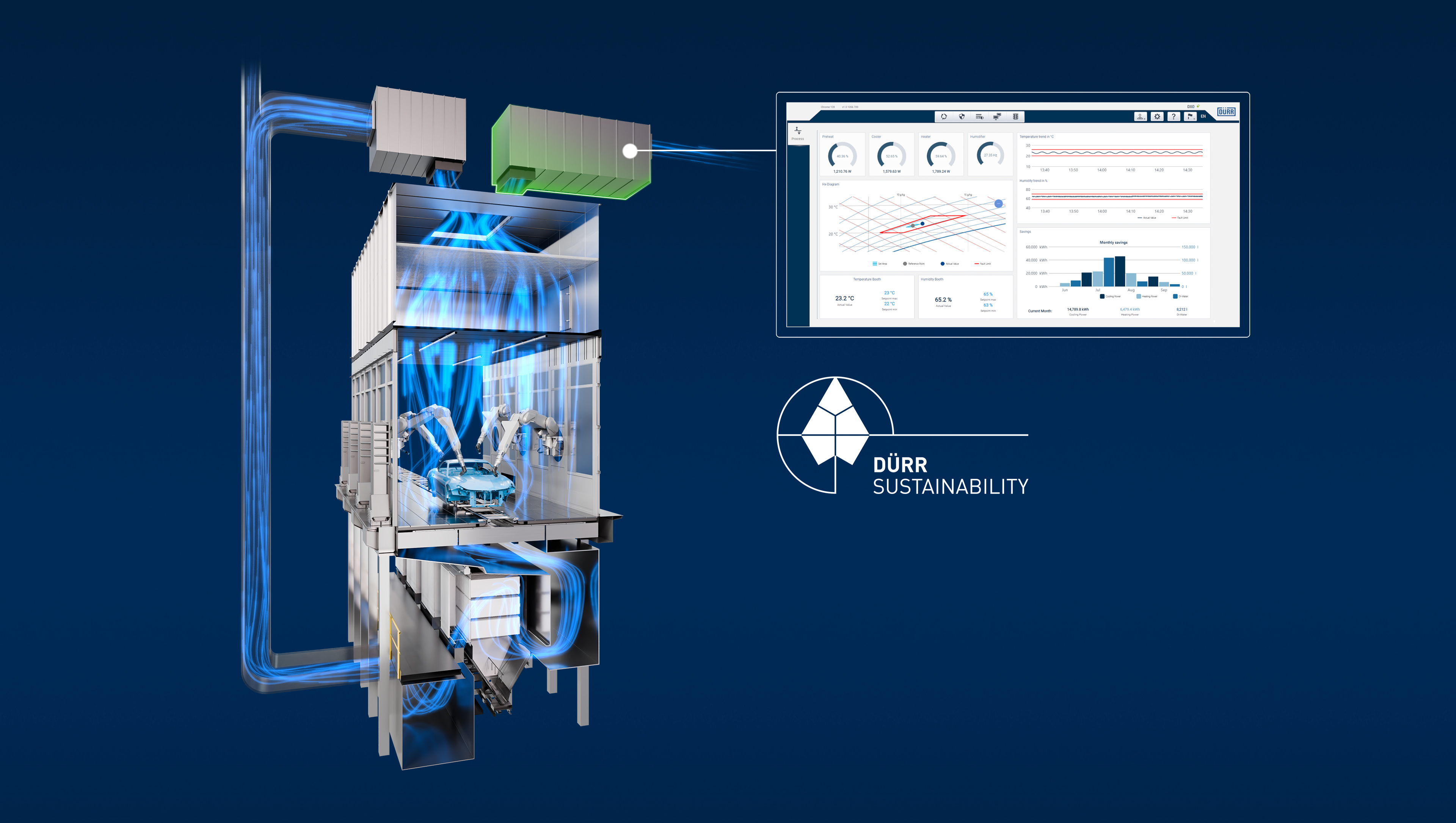
A user-friendly dashboard provides real-time data on energy consumption and potential savings. The direct comparison between window control and point control makes the advantages immediately visible. Depending on the previous control strategy, switching to window control can save between ten and fifty percent of energy. Both the location and the current handling by the respective OEM play a role here. Whether coming from rigid point values or existing window controls, the potential savings are correspondingly large.
Smart AC has a modular design and can be integrated into both existing and new systems. The solution contributes to achieving decarbonization goals and makes the trades involved in automotive production a driver of efficiency.
FURTHER RELATED
ARTICLES


Everything at a glance
DXQequipment.operation makes production data fully visible

From code to capability
How AI is changing software development at Dürr

Connected under one roof
The digital brands within Dürr and their contribution to end-to-end manufacturing