There is a moment in every technological shift when experimentation becomes something bigger. At Dürr, that moment is happening right now. Not in theory, not in strategy papers – but in real rooms, with real teams, building real solutions. At a recent AI hackathon in Bietigheim-Bissingen, Germany, software developers from the Digital Factory stepped out of their daily routines and into a new way of working. The goal was simple: Explore how Artificial Intelligence (AI) can accelerate software development. The result was something more fundamental – a shift in mindset.
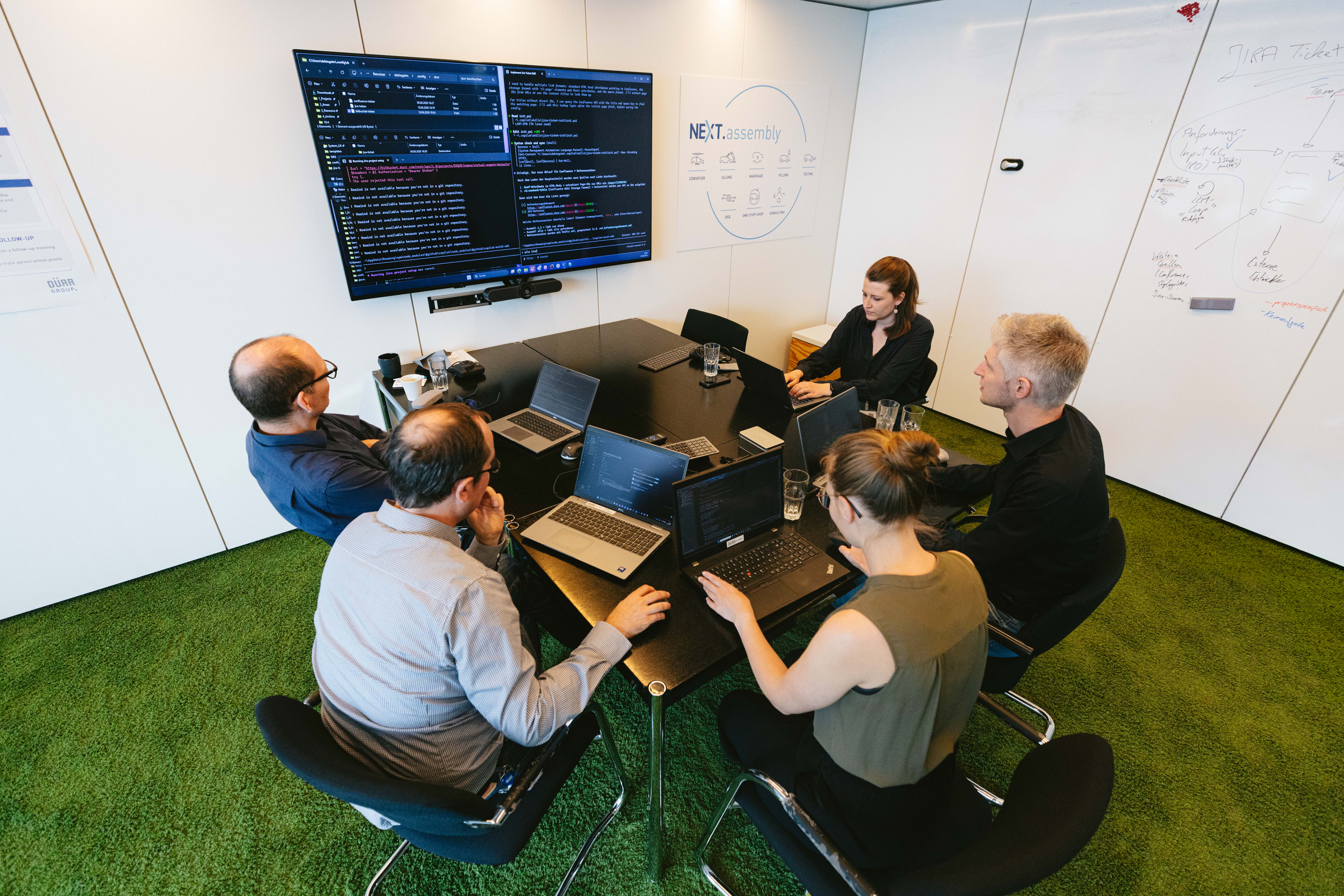
Various teams worked together to develop ideas.
Speed becomes the new standard
Traditionally, software development is structured around planning, alignment, and architecture. And for good reason – especially in an industrial environment where reliability matters. But AI is changing the game.
“At the end of the day, we want to create meaningful results and show that with AI, we can develop software very quickly and very efficiently,” says Jens Häcker, Vice President Digital Factory. During the hackathon, that ambition became visible. Teams moved from ideas to working prototypes in a matter of hours. Planning was reduced to a minimum. Instead, the focus was on building, testing, and learning fast. For many participants, that speed was the biggest takeaway.
“My highlight was to see how fast we can make progress. Within a very short time, we were able to develop a prototype that we are confident to present.” -states Dr. Jannis Hanke, DXQ Analytics and AI.
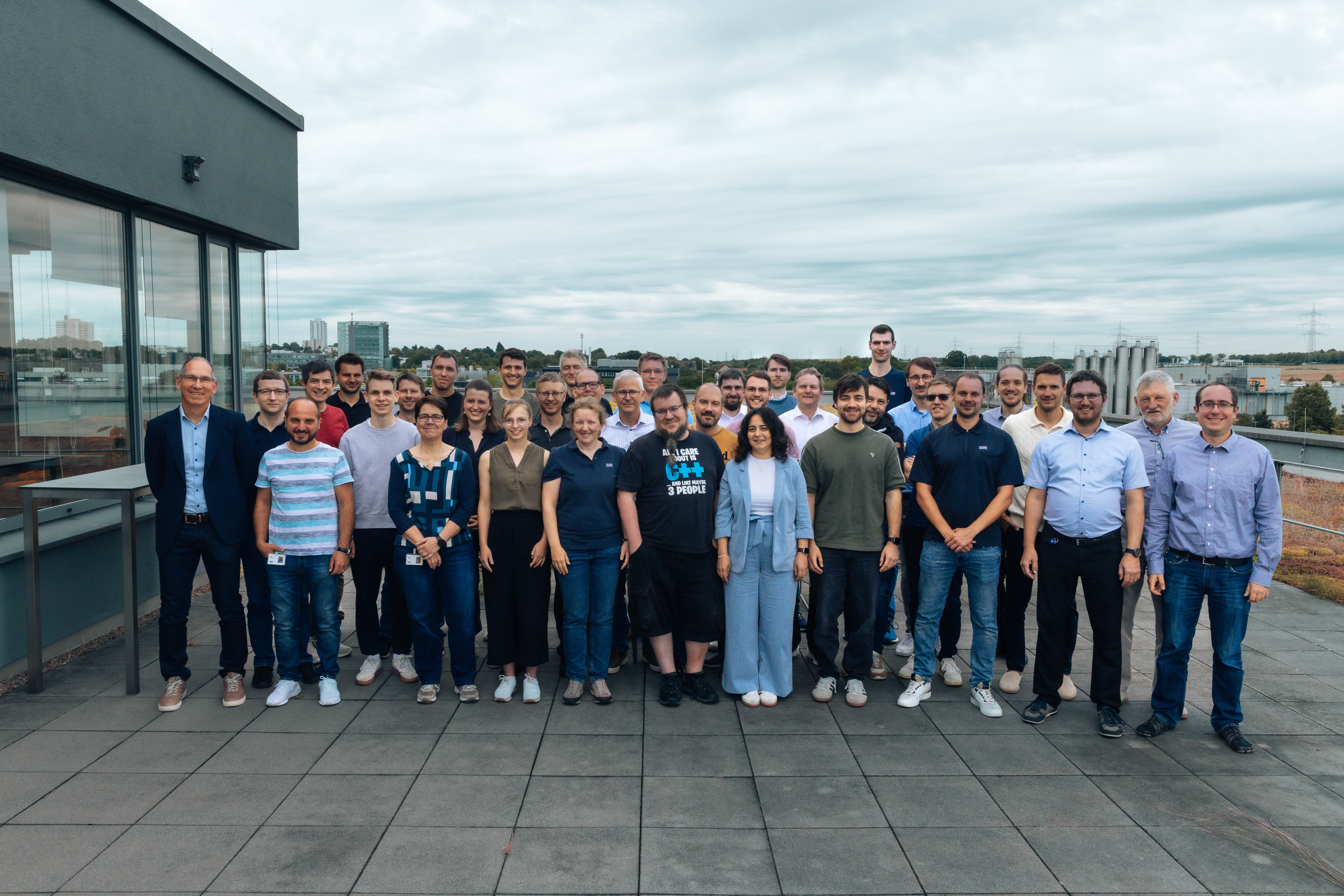
AI is currently one of the most exciting topics in businesses.
Learning by doing – with real impact
Yet the hackathon was not just about speed for its own sake. It was about understanding what AI can actually do in practice and where its limits are. What happens when AI starts writing code? How reliable is it? Where does human expertise remain essential? “The challenge is to ensure that what AI produces is truly usable in a production environment,” says Dr. Jannis Hanke. “Even if the code works on the surface, it needs to be reviewed, tested, and validated carefully.” This hands-on experience is exactly what the hackathon was designed to create. “We wanted to give people the opportunity to experience the tools directly,” explains Jens Häcker. “To try them out, to see what works and to understand how we can turn that into real business value in a very short time.”
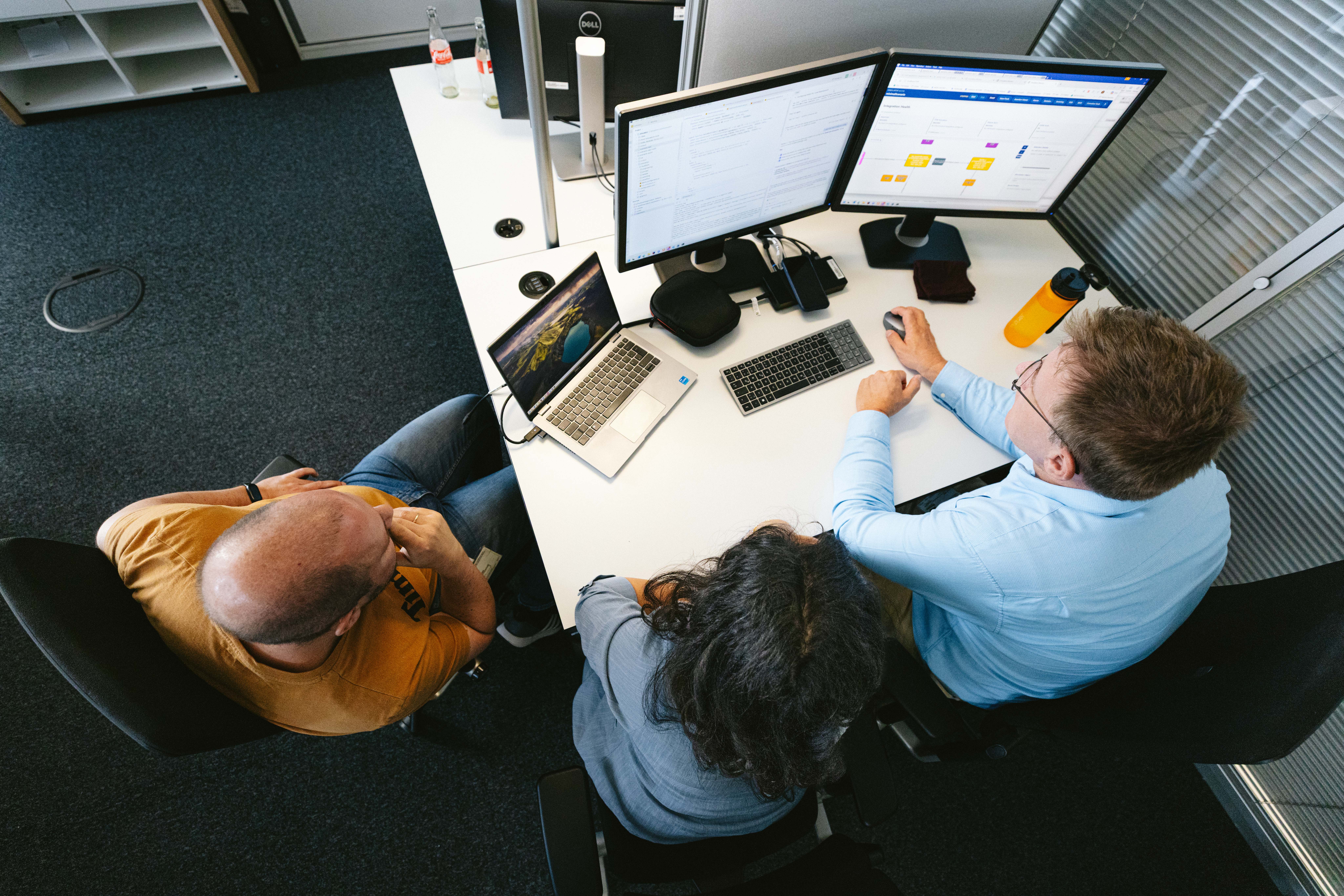
At the AI hackathon, participants were able to experience the tools being used live.
A different way of working
Walking through the hackathon space, one thing became immediately clear: the atmosphere was different. Less structured, but more energetic. Less predictable, but more collaborative. Teams were intentionally mixed. Experienced developers working alongside colleagues who were using AI tools for the first time. Ideas were not pre-defined, but emerged from real challenges in daily work. “The overall atmosphere was great,” says Dr. Lorenz Halt, AI & Robotics Lead. “There was a lot of enthusiasm, and people were really curious to explore the new tools and learn from each other.” That openness mattered. It lowered the barrier to entry and turned the hackathon into a shared learning experience. For many, it was also a glimpse into the future of software development.
“The hackathon is a big leap towards bringing AI into our daily business. It’s about taking the first steps and understanding how these tools can support us in what we do every day”, mentions Dr. Lorenz Halt.
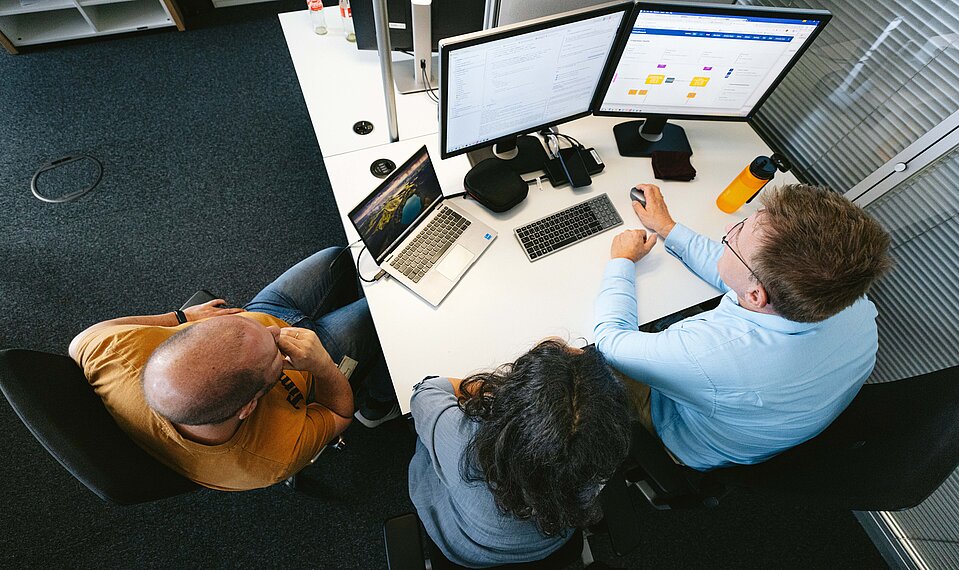
Interesting insights beyond the daily work routine.
What it means for customers
While the hackathon took place internally, its implications are clearly external. Because what changes here – speed, iteration, experimentation – directly affects what customers experience. “What our customers expect is speed and practical solutions,” says Jens Häcker, Vice President, Digital Factory. “If we can develop prototypes quickly and show concrete results early, we can move much faster towards final solutions.” That means shorter development cycles. Earlier validation. And ultimately, software that is closer to real-world needs. Or, put differently: less time between idea and impact.
We use cookies, similar technologies and tracking services
This website uses cookies, similar technologies and tracking services (hereinafter referred to as “Cookies”). We need your consent for Cookies, which not only serve to technically display our website, but also to enable the best possible use of our website and to improve it based on your user behavior, or to present content and marketing aligned with your interests. For these purposes, we cooperate with third-party providers (e.g. Salesforce, LinkedIn, Google, Microsoft, Piwik PRO). Through these partners you can also receive advertisements on other websites.
If you consent, you also accept certain subsequent processing of your personal data (e.g. storage of your IP address in profiles) and that our partners may transfer your data to the United States and, if applicable, to further countries. Such transfer involves the risk that authorities may access the data and that your rights may not be enforceable. Please select which Cookies we may use under ”Settings”. More information, particularly about your rights, e.g. to withdraw consent, is available in our Privacy Policy .