A tractor doesn’t spend its life on flawless asphalt. It works in mud, on dusty fields, and in all kinds of weather. Its paint finish must do much more than just look good: it protects machines and components from the wear and tear of years, often decades, of operation. At the same time, appearance plays an important role. Anyone investing in agricultural machinery expects not only reliability and durability, but also a look that reflects the machine’s value and quality. It is precisely this demand that makes painting agricultural machinery a unique challenge.
Many people associate Dürr primarily with the automotive industry. In fact, the company’s technologies are also used in agriculture, as well as in the construction and off-highway sectors. The ACE market (Agriculture, Construction, and Earthmoving & Equipment) presents manufacturers and painting experts with unique challenges. Over the years, Dürr and its Italian subsidiary Verind have developed specialized solutions designed specifically for these applications.
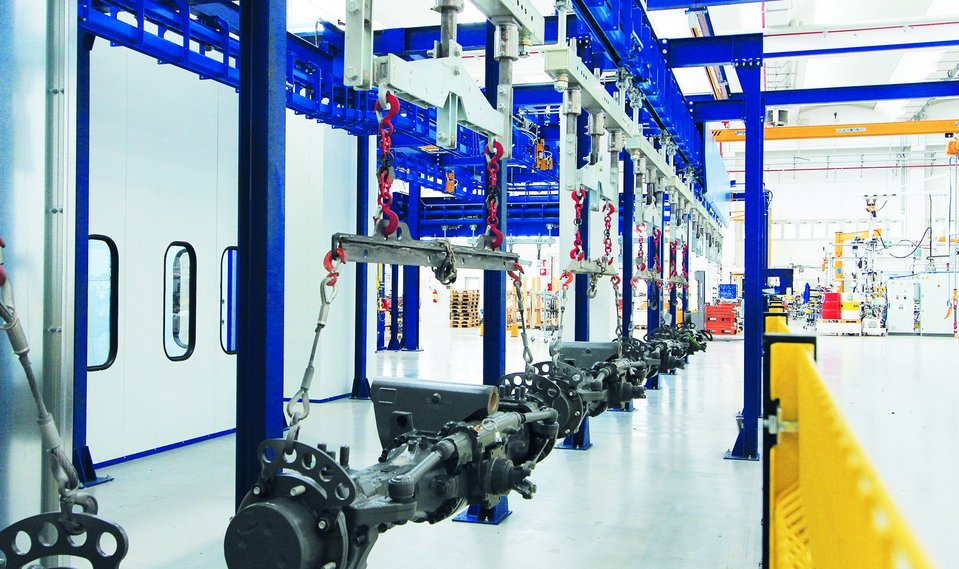
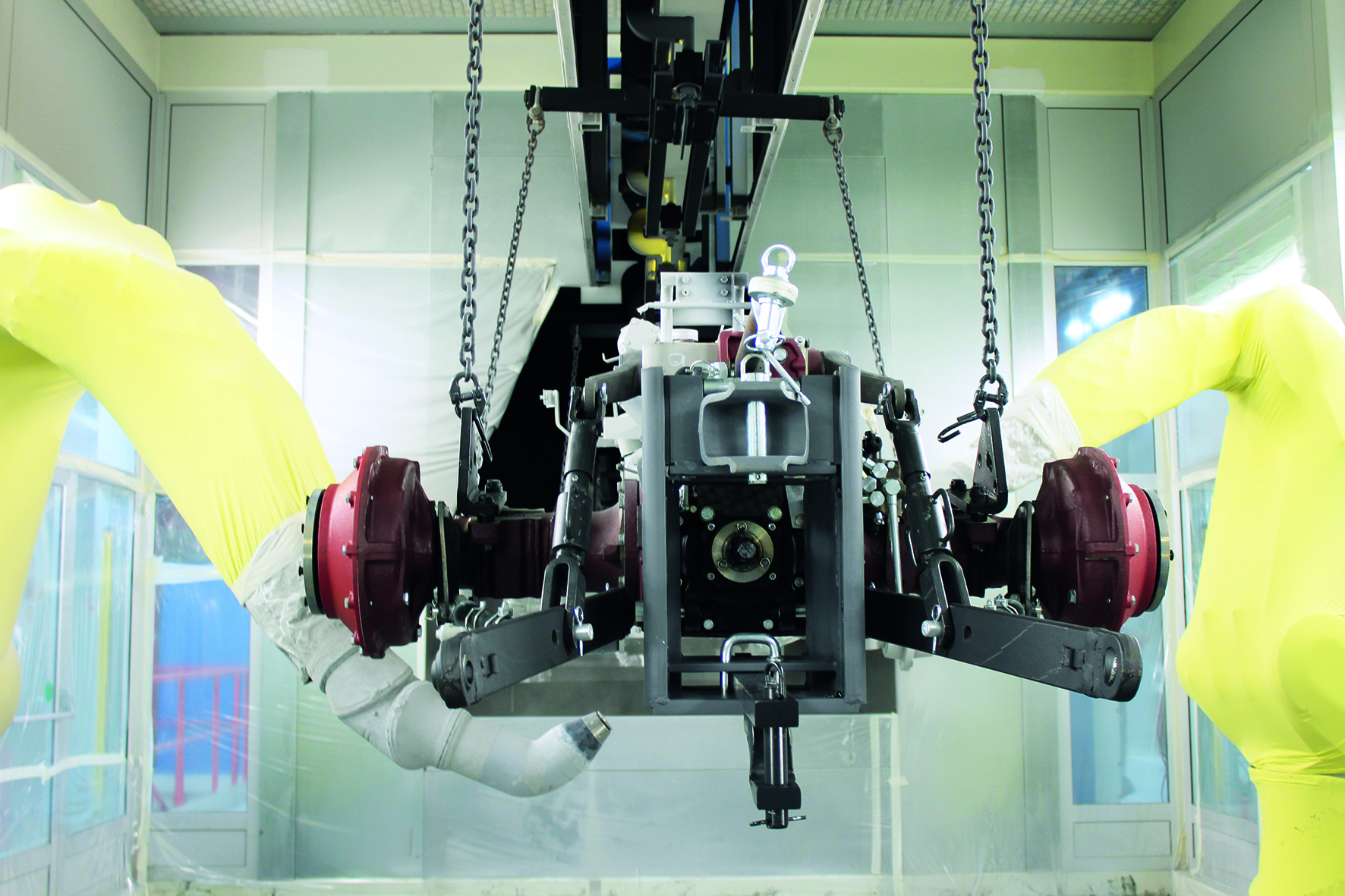
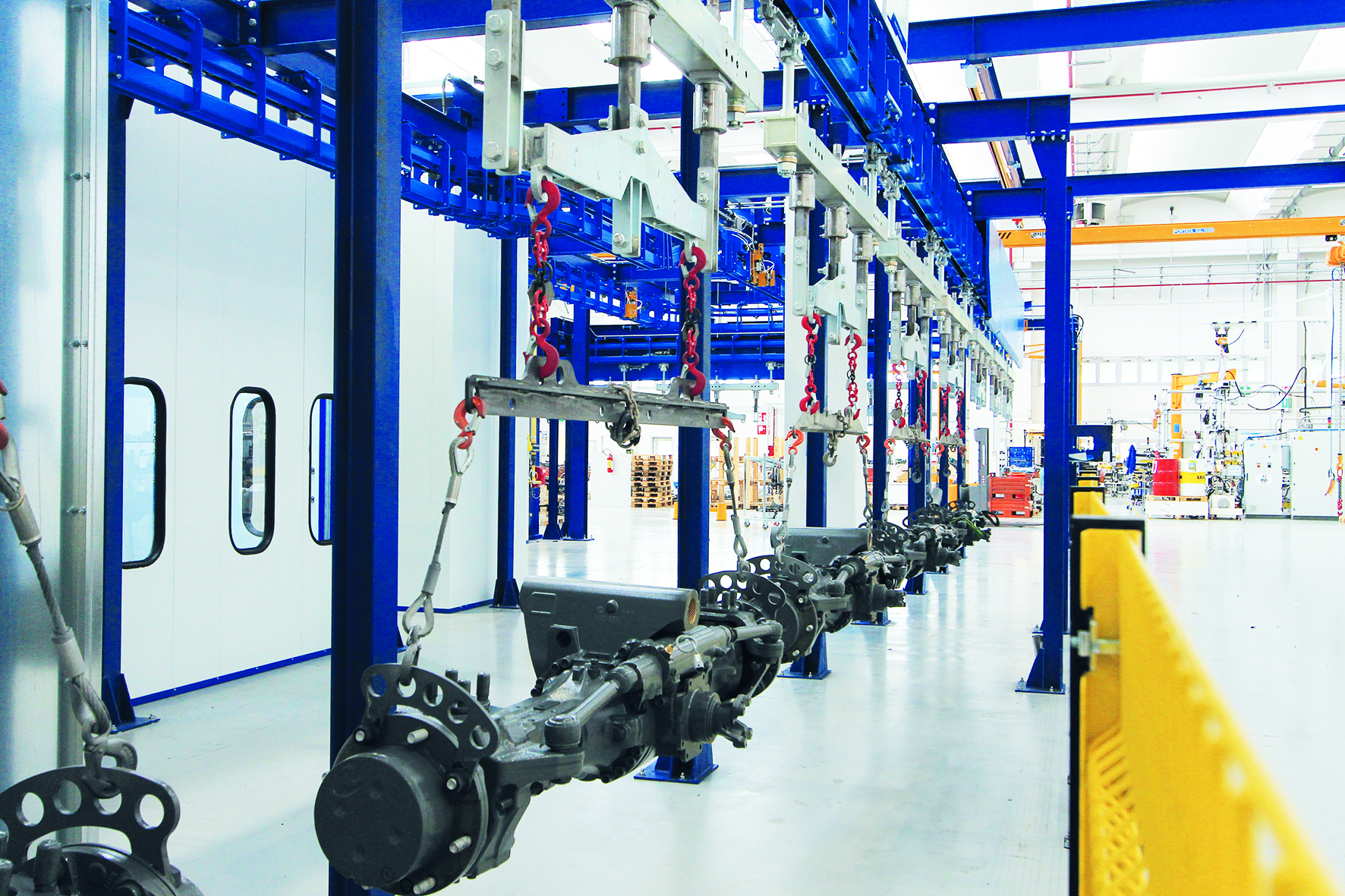
A quick look at the products themselves shows just how diverse the requirements are. Lower production volumes, greater model diversity, and often significantly more complex component geometries create different challenges for painting than those in automotive manufacturing. Added to this are different materials, paint systems, and coat thicknesses, each with its own process requirements. Not only are complete machines painted, but also drivetrains, axles, transmissions, and drive shafts. Many of these components require extensive pretreatment before painting can begin. Depending on the material, this may include blasting, chemical pretreatment, washing, and drying processes.
Powertrains are particularly challenging. Their complex geometry makes it difficult to achieve a uniform coating across all surfaces. As a result, manual touch up work is often still required, even in modern automated systems.
The demand on coating quality is equally high. If defects occur in either the primer or topcoat, corrosion can develop prematurely and cause significant long-term damage. As a result, the painting process has a direct impact on equipment service life.
The challenge in the ACE market is meeting a wide range of requirements while ensuring high process reliability and consistent quality. Manufacturers benefit from the experience that Dürr and Verind have built up over many years, both in the painting technologies and specifically in the ACE market. Rather than simply transferring solutions from other industries, the technologies are adapted to the specific requirements of agricultural machinery and off-highway vehicles.
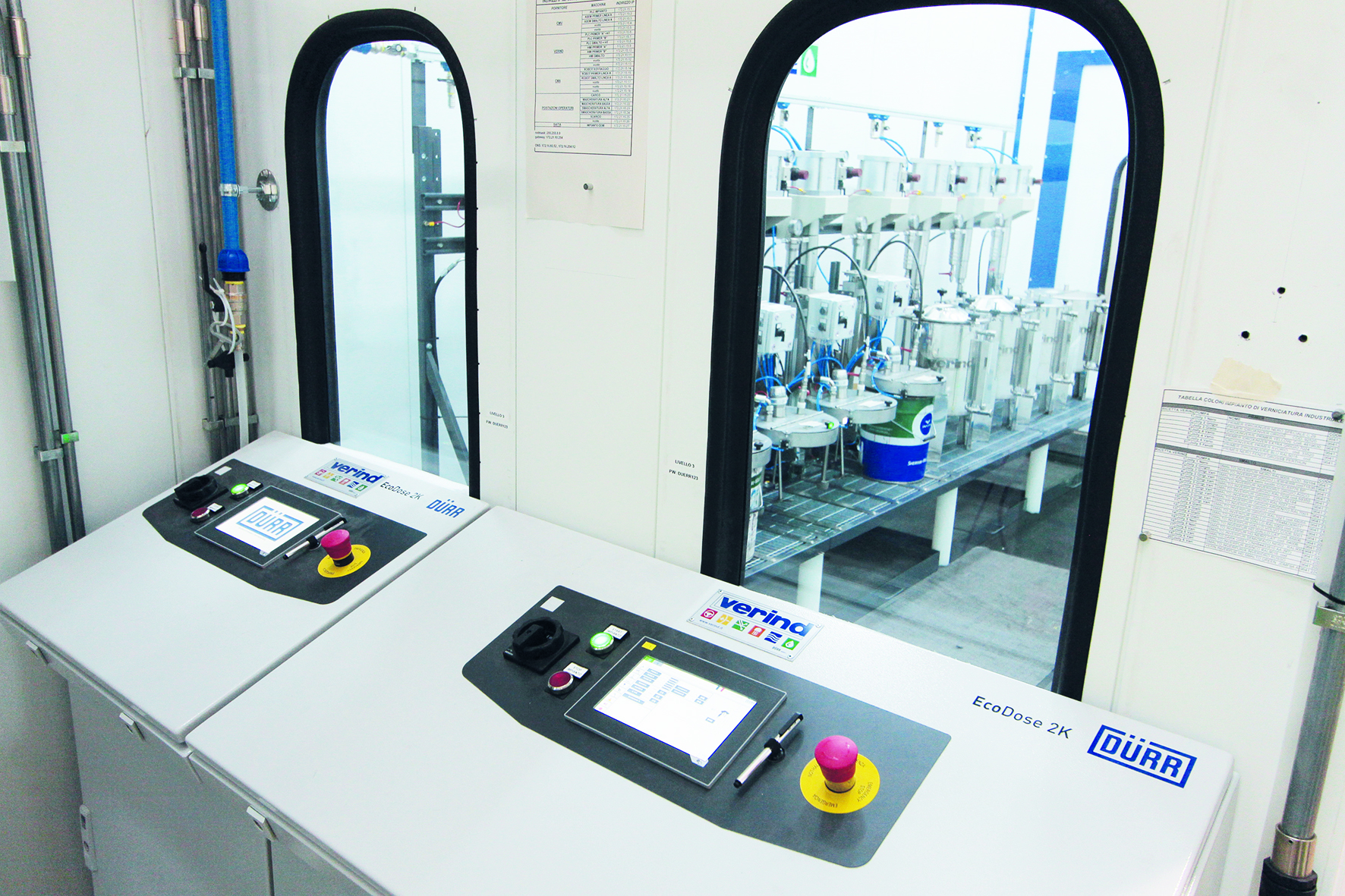
Dürr’s Italian subsidiary, Verind, plays a key role in this area. The company develops engineering solutions for painting and coating processes and combines them with Dürr technologies for paint supply, metering, application, and automation. The ACE market continues to evolve. Higher quality standards, growing demands for efficiency, and the need for long-lasting solutions are driving investment in new technologies.
Alessandro Soba of Verind has observed this trend firsthand through customer interactions: “What impressed me most was the manufacturers’ strong commitment to investing in more reliable technologies while simultaneously continuing to develop the skill levels of their technicians.” Projects in Europe, Turkey, and India demonstrate just how diverse customer requirements are and how flexible painting solutions must be to meet them.
A look at today’s production environment shows how widely customer requirements vary within the agricultural market. The spectrum ranges from smaller manufacturers that primarily need standard equipment and service, to medium-sized companies with semi-automated processes, and all the way to large OEMs operating fully integrated painting shops. As a result, requirements for automation, process control, and overall system design differ significantly. Smaller manufacturers often continue to rely on manual painting, while larger companies increasingly invest in robotics, digital process control, and automated application systems.
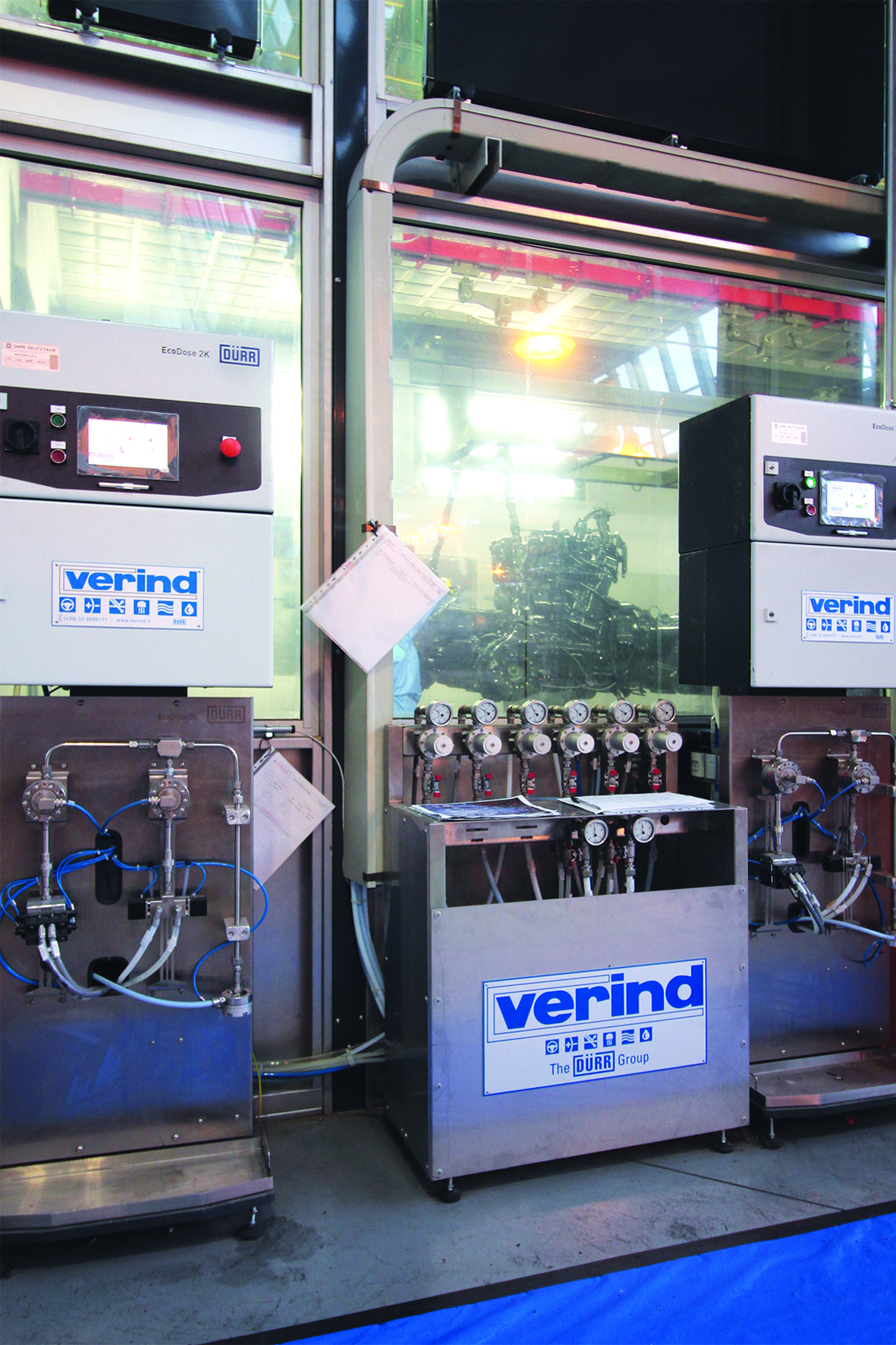
Specific projects demonstrate just how diverse the requirements in the ACE market can be. At John Deere’s plant in Mannheim, Germany, EcoBell2 high-speed rotary atomizers and the Dürr AUC control system support the painting of tractor chassis. At Türk Traktör in Turkey, paint supply and mixing systems, as along with eight Dürr process robots equipped with EcoBell2 technology, are used in production. For SAME Deutz-Fahr in Italy, a specialized solution was developed for coating tractor powertrains, using electrostatic application of water-based two-component paints. Alessandro Soba still remembers this project well: “It was a major challenge. Thanks to our industrial solution and our professionalism, we were able to prevail over our competitors.”
The global axle market also plays an important role. Companies such as Carraro DriveTech, Meritor Cummins, Comer Industries, and Dana Allison use Verind painting solutions that include paint supply rooms as well as automatic and manual 2K application stations.
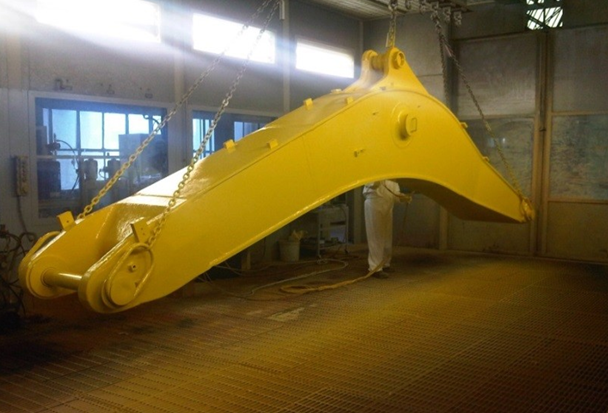
Painting an excavator part.
Sustainability as a driver for the next generation of coating
While reliability and quality remain top priorities, new requirements are reshaping how agricultural machinery is coated. Energy consumption, material usage, CO₂ emissions, and productivity play a much greater role today than they did just a few years ago. As a result, water-based coatings, direct-to-metal (DTM) systems, powder coatings, and digital process monitoring are becoming increasingly important. Modern water-based coatings have advanced significantly in recent years and now enable applications that were once reserved for solvent-based systems.
The machines themselves are also evolving. In the future, a tractor will no longer consist solely of an engine, drivetrain, and body, but increasingly of sensors, software, connectivity, and data-driven services. This raises the bar for both production and coating technologies.
At the same time, manufacturers are developing so-called “smart coatings.” In the future, these coatings may better compensate for minor scratches, provide greater resistance to mud and chemicals, simplify cleaning, or offer even more durable UV protection.
However, one thing is unlikely to change: the paint finish is far more than a cosmetic feature. It plays a crucial role in helping agricultural machinery withstand harsh operating conditions and continues to perform reliably over many years of use.
We use cookies, similar technologies and tracking services
This website uses cookies, similar technologies and tracking services (hereinafter referred to as “Cookies”). We need your consent for Cookies, which not only serve to technically display our website, but also to enable the best possible use of our website and to improve it based on your user behavior, or to present content and marketing aligned with your interests. For these purposes, we cooperate with third-party providers (e.g. Salesforce, LinkedIn, Google, Microsoft, Piwik PRO). Through these partners you can also receive advertisements on other websites.
If you consent, you also accept certain subsequent processing of your personal data (e.g. storage of your IP address in profiles) and that our partners may transfer your data to the United States and, if applicable, to further countries. Such transfer involves the risk that authorities may access the data and that your rights may not be enforceable. Please select which Cookies we may use under ”Settings”. More information, particularly about your rights, e.g. to withdraw consent, is available in our Privacy Policy .