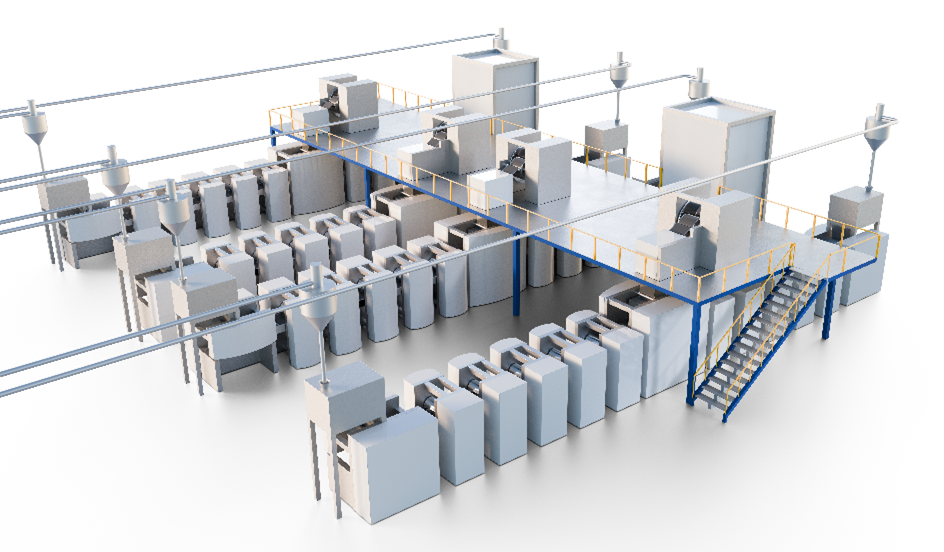
Battery cell production is entering a new phase. Demand is rising, cost pressure is increasing, and manufacturers are looking for ways to further optimize their factories. One of the most promising levers is dry electrode coating. Instead of processing the active material as a solvent-based slurry and then drying it in long ovens, the material is formed as a dry film and laminated onto the current collector. At Dürr, R&D Manager Dr. Stefan Doose and his team are working on turning this principle into an industrial solution: X.Cellify DC.
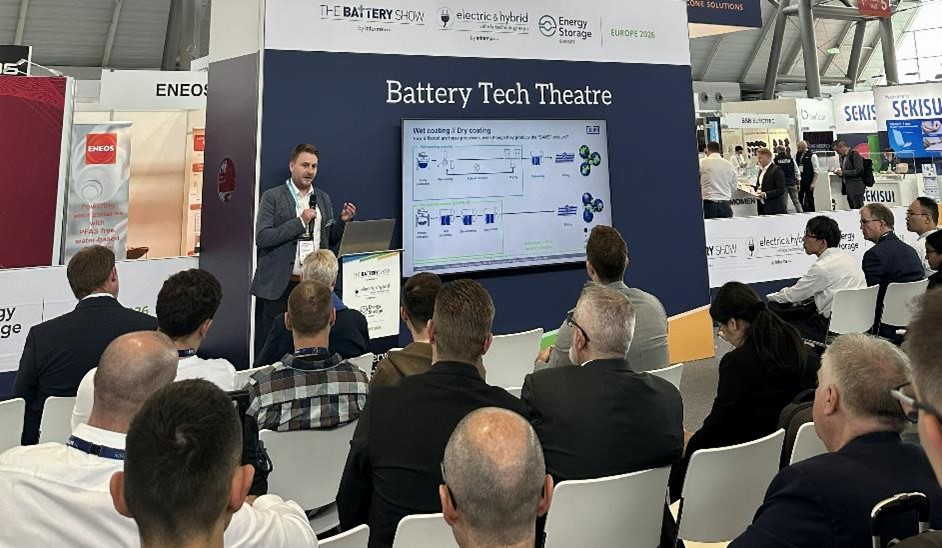
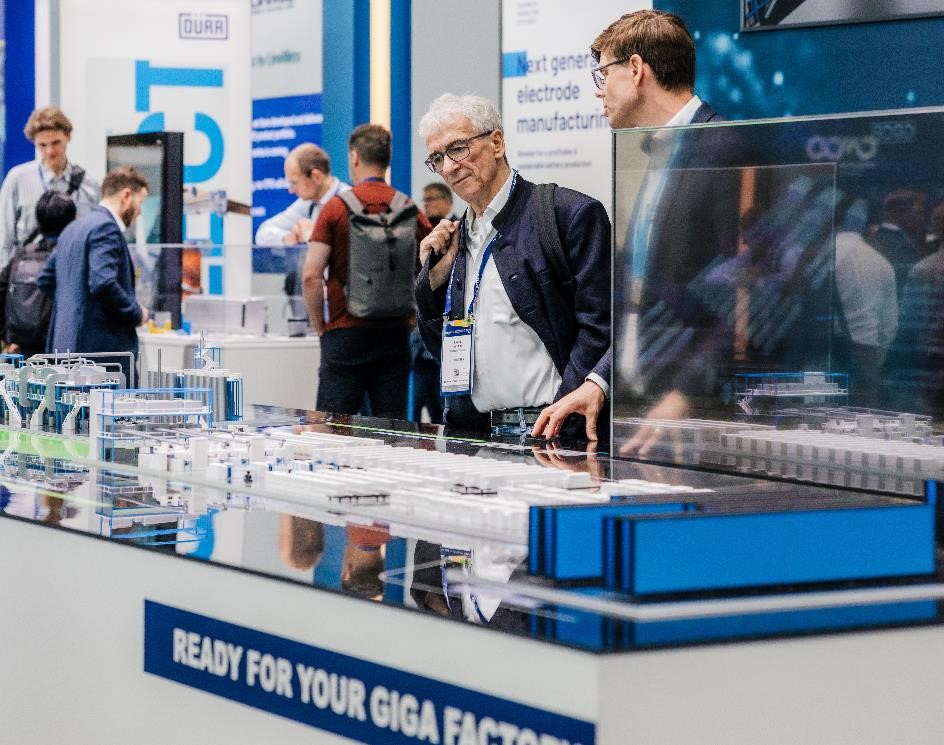
Dr. Stefan Doose presented Dürr’s dry coating technology on the Innovation Stage at Battery Show Europe.
Stefan, why is dry coating attracting so much attention right now?
Because electrode production is one of the most energy- and space-intensive parts of cell manufacturing. In conventional wet coating, active material is applied to metal foil as a dispersion, dried, and, in some cases, the solvent is recovered. That is proven technology, but it requires large dryers, solvent handling and therefore a lot of process energy. Dry coating removes these steps. For customers, this is not only a sustainability topic. It directly affects CapEx, OpEx, factory layout and time to market.
What is the idea behind X.Cellify DC?
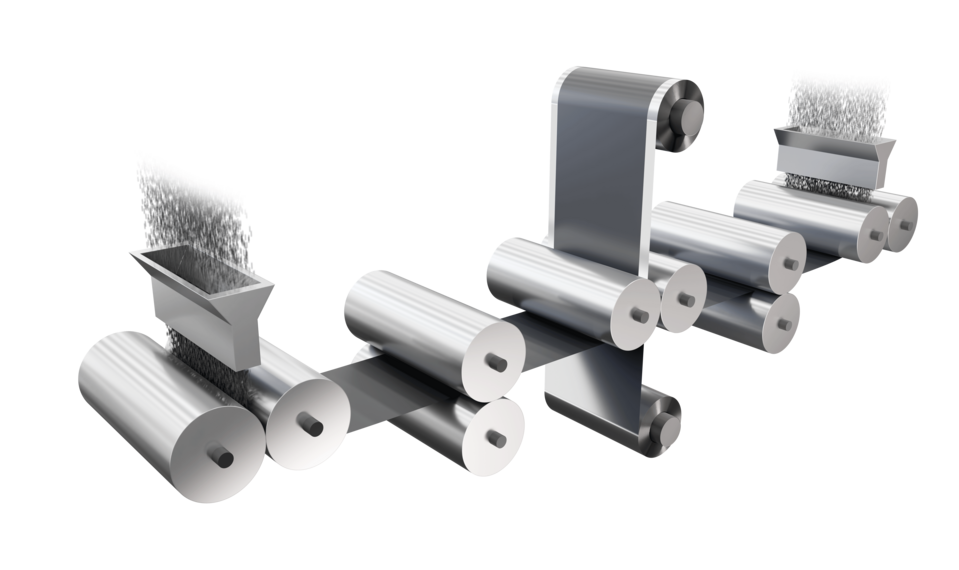
Our approach is to create a free-standing film of active material. The powder mixture is dosed, calendered to form a film, adjusted to the desired thickness, density, and surface loading, and then laminated to both sides of the collector foil. The important point is that the film runs through the system without a carrier foil until the final lamination step. If the film is not within the desired specification before lamination, the material can be returned to the process. This makes material use much more efficient, especially because active materials are among the most valuable components in a battery cell.
A powder mixture is calendered to form a film, which runs through the system without a carrier foil.
How does this differ from other dry-coating concepts?
There are various dry electrode processes used in the industry, including, for example, spray, 3D printing, and (multi-)compaction processes. X.Cellify DC is designed around continuous roll-to-roll processing and calendering (compaction) expertise. Dürr has deep experience in web handling, coating, calendering and process integration. We use that know-how to make the dry film stable, controllable and scalable. The goal is not a laboratory application, but rather to work with our customers to reach the gigawatt scale step by step.
What benefits can cell manufacturers expect?
The first benefit is the elimination of drying ovens and solvent recovery in electrode coating. This reduces the required production space by up to 65 percent and also significantly cuts energy consumption compared to wet coating. The second benefit is material efficiency: before lamination, the free-standing film can be fully recycled back into the process. The third benefit is product quality. Since lamination onto the collector foil requires only low force, the foil is treated gently and downstream processability improves.
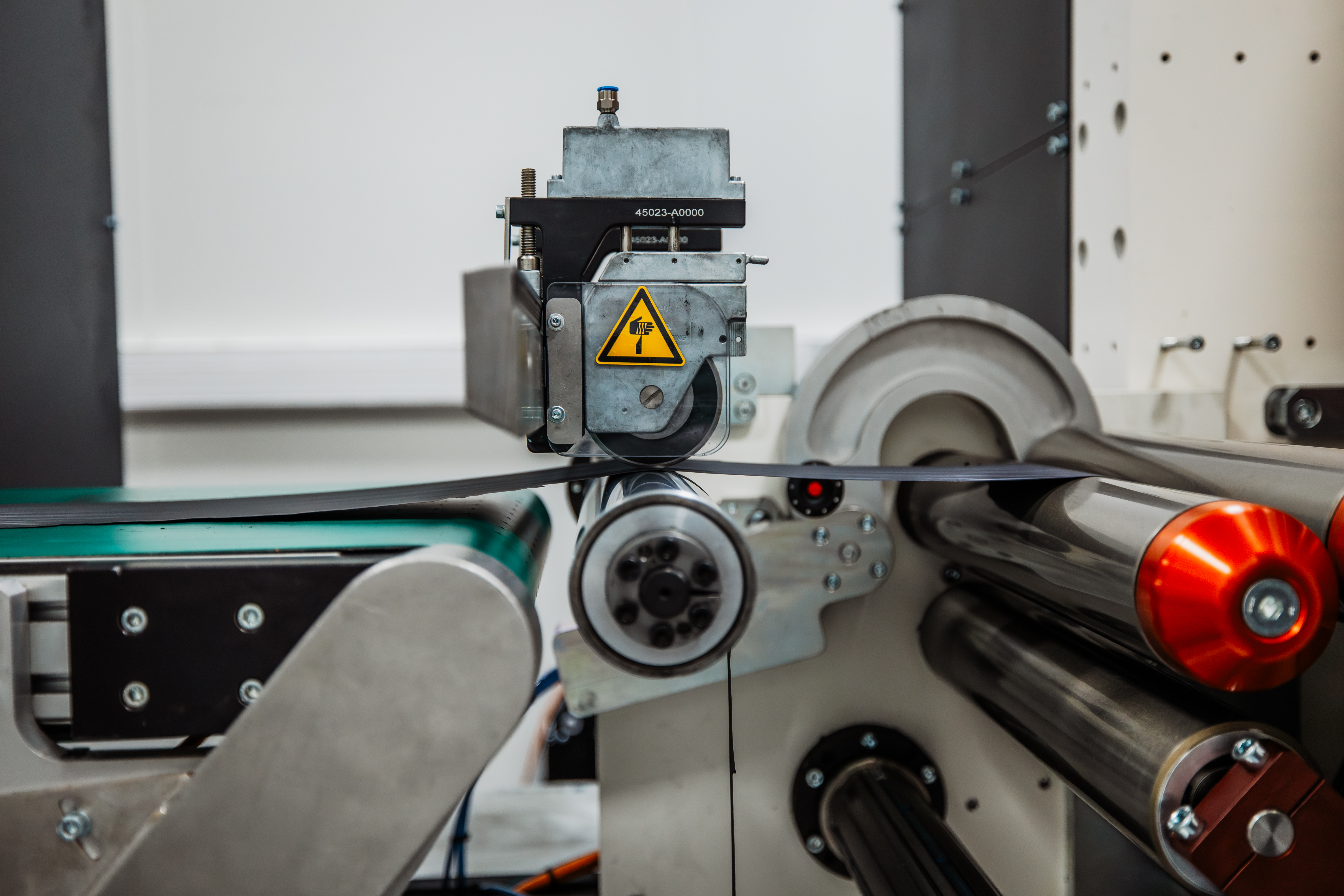
Dürr is developing its X.Cellify DC dry coating at its subsidiary in France.
Does dry coating also influence cell performance?
Yes, that is one of the reasons the topic is so interesting. Among other things, dry coating enables the production of thicker electrode layers without binder migration, and thicker electrodes are an important step toward higher energy density, as they increase the amount of active material per unit area. At the same time, the process has to maintain homogeneity, adhesion, porosity and ion transport. This is where process control becomes decisive. In our tests, we were able to demonstrate that the produced layers comply with current industry standards. We evaluated the full-cell performance in more than 650 cycles. The physical electrode parameters thickness, density, areal capacity and porosity are in the target range and we saw a reduction in contact resistance in the electrodes by a factor of 5 to 10.
What makes scaling from lab to fab so challenging?
In the lab, you can often prove that a material system works under controlled conditions. In production, you need stability over long runs, reliable web handling, repeatable film formation and a process window that tolerates real industrial variation. Dry coating is not simply a replacement of one machine by another. It changes the interaction between material formulation, mechanical treatment and final electrode properties. That is why we focus strongly on pilot facilities. They allow manufacturers to build process knowledge early, to evaluate the interaction between material, process and equipment, and to develop their individual process to industrial scale.
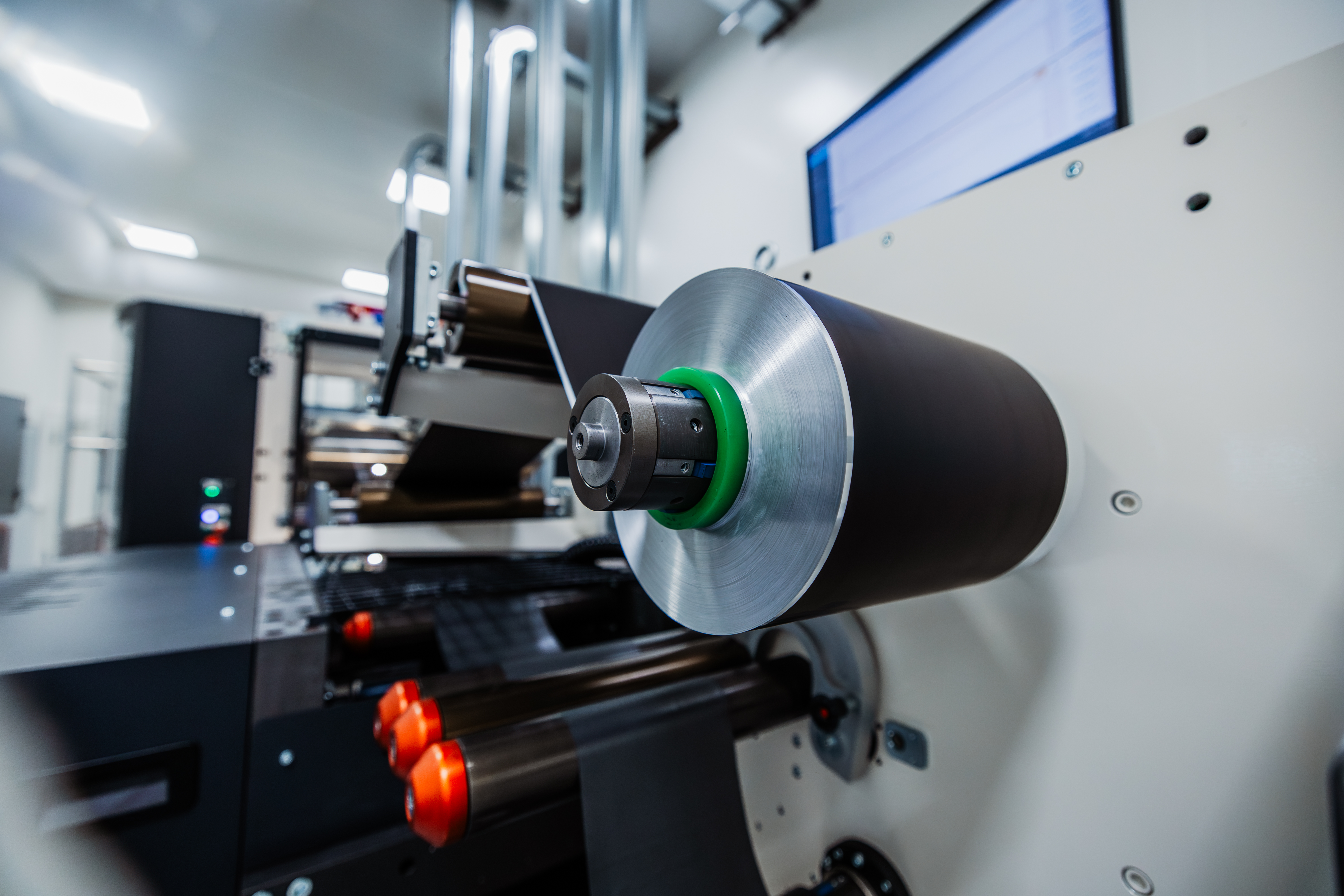
X.Cellify DC is ready for use in pilot plants on a gigawatt scale.
What does the roadmap look like?
We start working with our customers in our lab and support them all the way through to their mass production. We see three stages: First, laboratory work to understand the material and define target parameters. Second, pilot lines where customers can validate film formation, densification, lamination and downstream behavior at relevant widths and speeds. Third, production lines that use the knowledge gained in the pilot phase. Our portfolio concept includes a lab coater and pilot coater with 300 mm electrode width, and scale-up options toward wider and faster lines on a gigawatt scale.
Which cell chemistries can be addressed?
X.Cellify DC is intended to be flexible. The technology is relevant for today’s lithium-ion batteries and also for future cell concepts such as solid-state batteries. The same basic principle – forming a free-standing dry film and laminating it – can be adapted to different active materials, binders and additives. That flexibility is important, because battery manufacturers are still optimizing chemistries for cost, energy density, safety and raw-material availability.
Dürr presented ist X.Cellify portfolio at The Battery Show Europe in Stuttgart.
What role does Dürr’s broader battery portfolio play?
Dry coating is part of the X.Cellify product line, which covers key steps in cell manufacturing from electrode production to electrolyte filling. That matters because electrode quality affects everything that follows: slitting, stacking or winding, cell assembly, filling and formation. With X.Cellify DC, we are adding a next-generation process to Dürr’s established competence in wet coating, drying, calendering and solvent recovery. Therefore, we can offer customers the entire production route, not just one isolated machine.
If you had to summarize the promise of X.Cellify DC in one sentence, what would it be?
From our point of view, X.Cellify DC is about making dry electrode coating industrial: less energy, less space, less waste and a scalable path from our lab to the customer’s production. The technology still requires close collaboration between equipment supplier, material developer and cell manufacturer. But that is exactly where the opportunity lies. If we combine material know-how with robust process engineering, dry coating can become a key enabler for the next generation of battery factories.
We use cookies, similar technologies and tracking services
This website uses cookies, similar technologies and tracking services (hereinafter referred to as “Cookies”). We need your consent for Cookies, which not only serve to technically display our website, but also to enable the best possible use of our website and to improve it based on your user behavior, or to present content and marketing aligned with your interests. For these purposes, we cooperate with third-party providers (e.g. Salesforce, LinkedIn, Google, Microsoft, Piwik PRO). Through these partners you can also receive advertisements on other websites.
If you consent, you also accept certain subsequent processing of your personal data (e.g. storage of your IP address in profiles) and that our partners may transfer your data to the United States and, if applicable, to further countries. Such transfer involves the risk that authorities may access the data and that your rights may not be enforceable. Please select which Cookies we may use under ”Settings”. More information, particularly about your rights, e.g. to withdraw consent, is available in our Privacy Policy .